PostTime:4/14/2026
From drip irrigation that redefines arid farming,
to desalination and water reuse
powering water management,
to air and solid waste treatment
driving circular economy -
Environmental Engineering Program at the Technion
has led through innovation,
making it a global cradle for environmental engineers.
Now, this legacy of innovation is coming to GTIIT.
In 2026 undergraduate admissions,
GTIIT extends its "Energy, Environment, and Human Health" vision,
with this new enrollment program -
one more door for a green future.
From labs to industries,
frontier tech, research resources - all are ready.
This "hardcore" program is waiting for you to shape it.
I Program Overview
The Environmental Engineering Program at the Technion is a key talent incubator of environmental engineers for Israel’s industrial and research institutions, and is closely associated with Israel’s world-renowned technologies such as agricultural drip irrigation and water treatment. In 2018, as one of the earliest established superior disciplines at the university, Environmental Science and Engineering was selected into the Key Discipline of the Guangdong Provincial High-level University Development Plan (“Striving for First-Class”). On this basis, Guangdong Technion-Israel Institute of Technology (GTIIT) received approval from the Ministry of Education of China to launch the undergraduate Environmental Engineering program in October 2025.
Drawing on the advanced education philosophy of the Faculty of Civil Engineering at the Technion, the Environmental Engineering program at GTIIT features a solid scientific foundation and wide practical application in its talent training curriculum. The program attaches great importance to the transformation of scientific and technological achievements, highlights industry-university-research collaboration and engineering application, and promotes the industrialization of technologies. Since 2018, the discipline has achieved fruitful outcomes: more than 350 research papers published; 12 national and provincial-level projects approved; 10 industrial projects implemented; 3 patents authorized; and 2 provincial-level awards conferred. Solid disciplinary development and increasingly mature educational achievements have laid a firm foundation for the growth of the Environmental Engineering program.

II Cultivation Goals
This program aims to cultivate highly qualified professional and technical talents with a solid foundation in mathematics, physics, chemistry, and biology, proficient mastery of the basic theories and practical skills of various disciplines related to environmental engineering, keen insight into engineering and technical issues, the ability to accurately grasp scientific issues in environmental engineering, and the capacity to propose solutions for specific engineering problems. Graduates will also possess good English expression and communication skills.
Under this training model, graduates will possess a solid interdisciplinary knowledge base in environmental engineering, chemical engineering, and biotechnology, giving them a competitive advantage in related fields. Through this program's rigorous scientific training, graduates aspiring to further study can pursue graduate degrees in environmental engineering, chemical engineering, and related disciplines at world-class universities.
III Cultivation Scheme
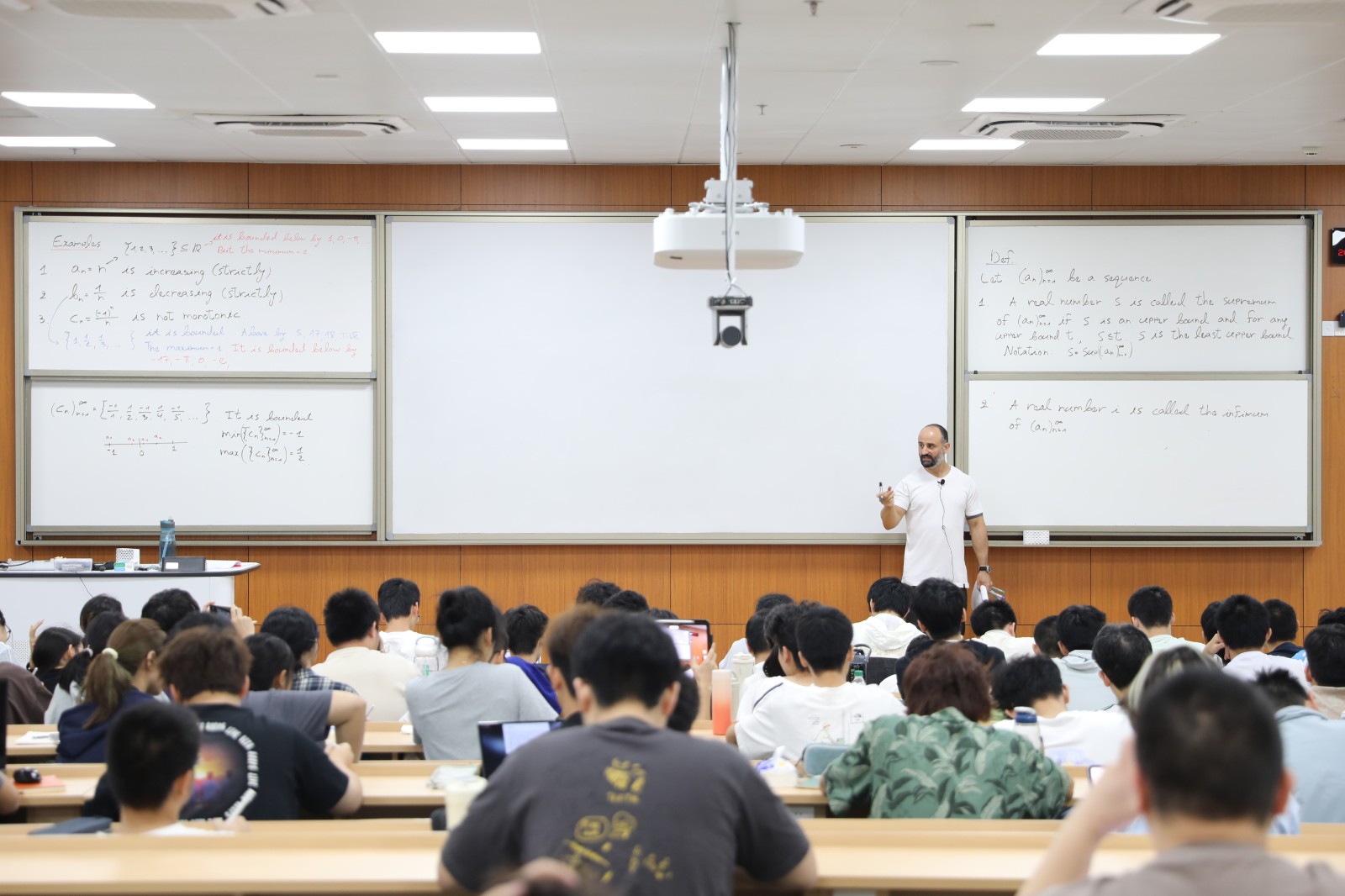
The program conducts teaching in accordance with the professional courses offered by the Technion and adopts a credit system. Students are required to complete 156.5 credits during their undergraduate studies. Meanwhile, students must complete ideological and political theory courses and other related courses required by the Ministry of Education of China. Students who meet the program's credit requirements will be awarded the bachelor's degree in Environmental Engineering by both the Technion and GTIIT. The program's training plan may be appropriately adjusted in accordance with the Technion's academic arrangements, subject to the current year's teaching schedule.
The teaching content of this program includes basic courses in mathematics, physics, chemistry, and biology, professional basic and core courses in environmental engineering, as well as a wide range of professional elective courses focusing on key directions such as sewage treatment, membrane separation technology, water treatment process design, numerical simulation of bioprocesses, soil physics and chemistry, solid waste, environmental remediation, air pollution, and project research. While mastering basic theories and technical principles, students will develop the ability to analyze problems, refine scientific issues, and solve engineering and technical problems through training in scientific research projects.
The program emphasizes international training. Professional courses are taught in fully English-medium instruction using original English textbooks and teaching materials. Various international exchange activities are offered to enhance students' global perspective and cross-cultural communication skills.
The program attaches importance to students' quality education and professional ethics training. Through general courses, professional courses, and various lectures, students' professional ethics and morality are cultivated, and their understanding of the impact of science and technology on nature and society is enhanced.
IV Faculty
This program recruits high-level talent and young scientists globally to build a faculty team that is internationally competitive. All faculty members and researchers have studied, taught, or conducted research at world-class universities and research institutions, including the California Institute of Technology, Nanyang Technological University, Carnegie Mellon University, The University of Hong Kong, The Hong Kong Polytechnic University, The Hebrew University of Jerusalem, Agricultural Research Organization of Israel, major water resources research institutes, Microbial Ecology Laboratory of Harvard University, and Swiss Federal Institute of Aquatic Science and Technology.
V Teaching Conditions
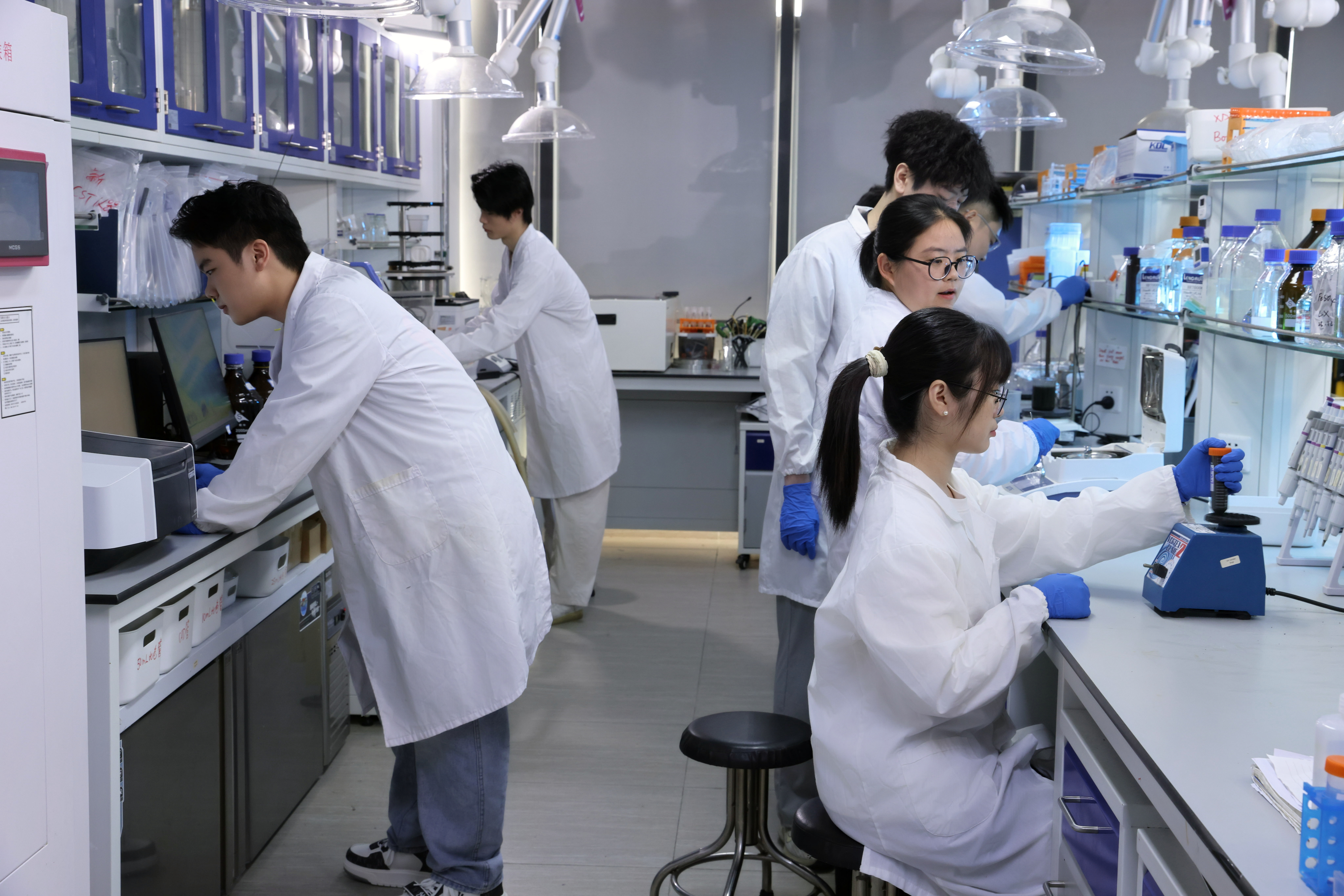
The Environmental Engineering program is equipped with teaching and research laboratories. These include teaching laboratories such as the Water Chemistry Laboratory, Environmental Engineering Laboratory, and Microbial Engineering Laboratory. It also has scientific research laboratories, including the Environmental Sustainability Laboratory, the Microbial Ecology Laboratory, and the Sewage Treatment and Resource Recovery Laboratory.
All teaching laboratories of the program are equipped with advanced instruments and equipment, including Gas Chromatography-Mass Spectrometry (GC-MS) Instruments, Inductively Coupled Plasma-Mass Spectrometry (ICP-MS) Instruments, Automatic Nucleic Acid Extraction Instruments, and Total Organic Carbon (TOC) Analyzers, which meet international top-tier standards. High-level teaching and research equipment is continuously introduced to cultivate students' scientific research capabilities and build scientific research experience, thereby preparing them for future graduate education.
VI Career Prospects
With a solid foundation in mathematics, physics, chemistry and biology, systematic engineering technology training and rich scientific research practical experience, the program provides broad space for graduates to further their studies. Graduates can further specialize in key areas of environmental engineering, including water and wastewater treatment, seawater desalination, hydrology, soil and groundwater remediation, and air pollution control. With its interdisciplinary curriculum and research training, the program opens doors for graduates to advance in fields such as energy and environmental engineering, environmental chemistry and ecotoxicology, fluid mechanics and environmental simulation, bio-environmental engineering, and environmental policy and management.
Graduates will be qualified for positions including but not limited to: process designers, technical engineers, technical consultants, project managers in relevant industries, and various technical roles in environmental protection enterprises. In addition, graduates may also apply for civil service or public institution positions related to Environmental Engineering.
Text: GTIIT Undergraduate Studies Offce, GTIIT News & Public Affairs
Photos: GTIIT News & Public Affairs