PostTime:4/21/2026
During his master's studies, Liu Shuang published his work in journals Nano Letters, Physical Review B, and Applied Physics Letters, and received the National Graduate Scholarship. At the end of 2024, he joined Guangdong Technion - Israel Institute of Technology (GTIIT) to begin his doctoral journey. In just over a year, he has published two more papers in the top physics journal, Physical Review Letters—this new achievement records his scientific research story with his mentors.
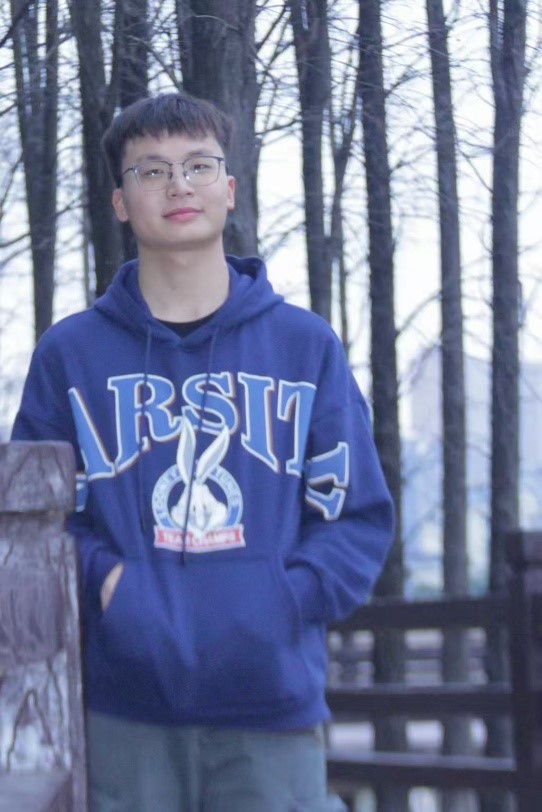
Liu Shuang
Education:
B.Sc. in Physics, Hunan University of Science and Technology
M.Sc. in Physics, Central South University
Ph.D. in Physics (current), GTIIT
Guided by mentors and empowered by GTIIT
When asked why he chose GTIIT, Liu Shuang valued most of its unique and pure research environment. "GTIIT is truly a 'hidden gem' of a research university." The university adopts an independent PI system with small research groups, allowing students to benefit from "hands-on" mentorship, which is crucial for doctoral growth. Besides, upon graduation, he will receive a Ph.D. degree from the Technion - Israel Institute of Technology, which carries substantial weight.
"Learning at GTIIT is excellent and offers great value," he said. The university provides doctoral students with single dormitory rooms, ensuring privacy and quality rest. Even better, the beach is less than half an hour away from campus. "It's very relaxing to enjoy the sea breeze on weekends." Moreover, the generous scholarship, comparable to international standards, allows him "to focus entirely on research without any worries".
Liu Shuang was deeply grateful for the tremendous help from his mentors. "Prof. Peng Chen and Prof. Ofer Neufeld have given me exceptional patience and detailed guidance, breaking down clear and thorough physical pictures step by step. Prof. Oren Cohen has a very cutting-edge academic vision and can guide the overall direction of research from a higher dimension. Their guidance has not only advanced specific projects but also deepened my understanding of how to conduct high-level research."
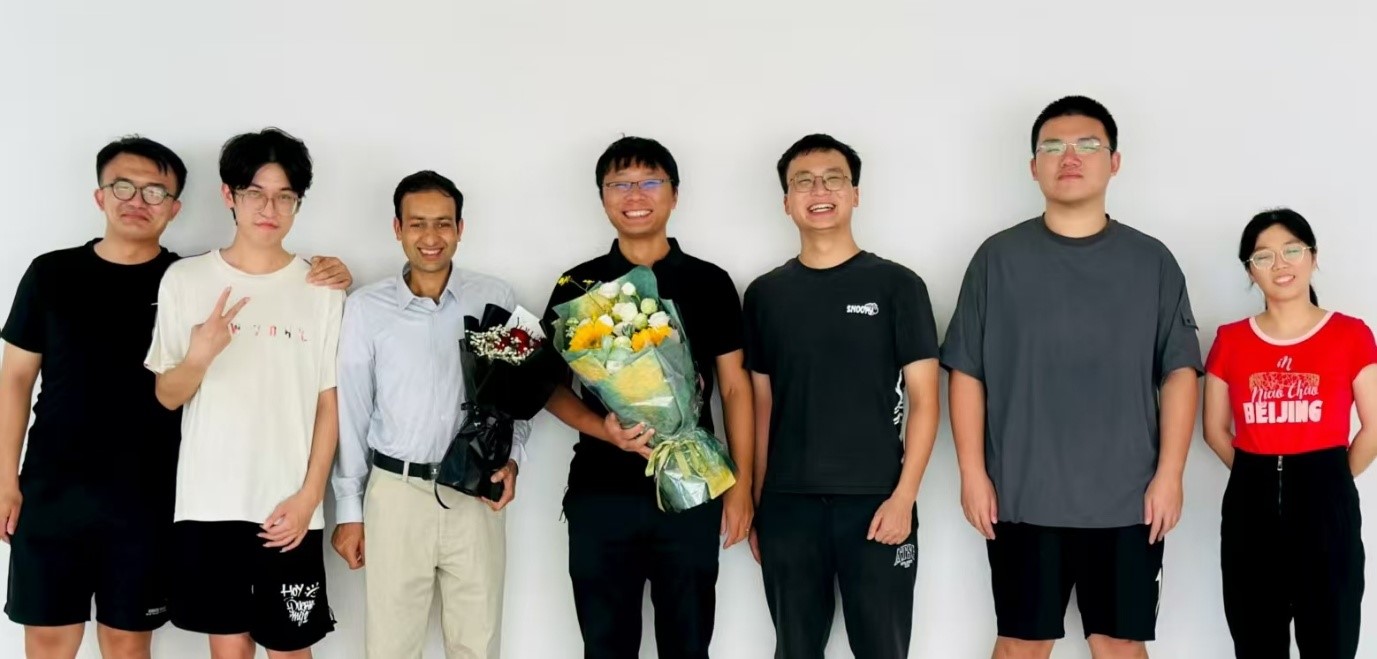
group photo of the research team (Liu Shuang is the third from the right)
In his view, GTIIT not only enables him to receive in-depth joint mentorship from three supervisors simultaneously but also provides a truly international perspective. "You can enjoy an international research environment without leaving China. By graduation, you'll develop confident English skills that make you fearless anywhere, and more importantly, you'll build close connections with international peers while still in China." Additionally, the opportunities to work on national-level research projects at GTIIT have greatly enhanced his academic credentials.
Working with his mentors on advancing projects, refining papers, and responding to reviewer comments, he has seen clear improvements in his scientific thinking and academic expression. Furthermore, he was impressed by GTIIT's rich academic exchange opportunities—he once had lunch with Nobel laureate Frank Wilczek at an academic conference. "That was truly inspiring."
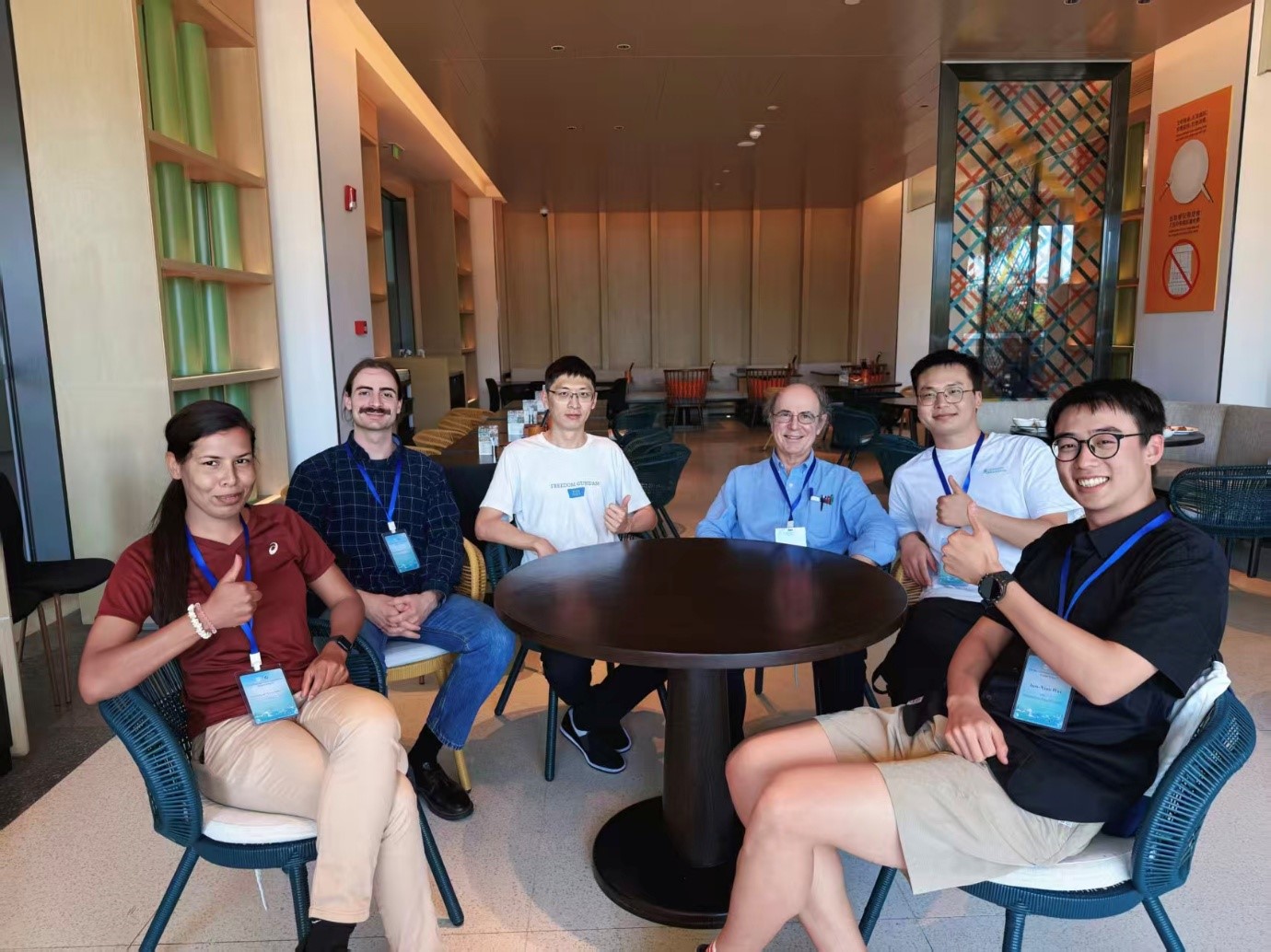
Liu Shuang (second from right) had lunch with Nobel laureate Frank Wilczek (third from right)
Focus on interests and cultivate with dedication
For him, research is not just work but a part of life. "Figuring out an unclear problem step by step is inherently attractive."
In his doctoral phase, Liu Shuang focused on light-matter interactions, particularly novel states and phase transition mechanisms in condensed matter systems driven by femtosecond lasers. "I am interested in whether ultrafast lasers can modulate the structure and magnetism of materials, and whether such modulation can lead to new physical phenomena."
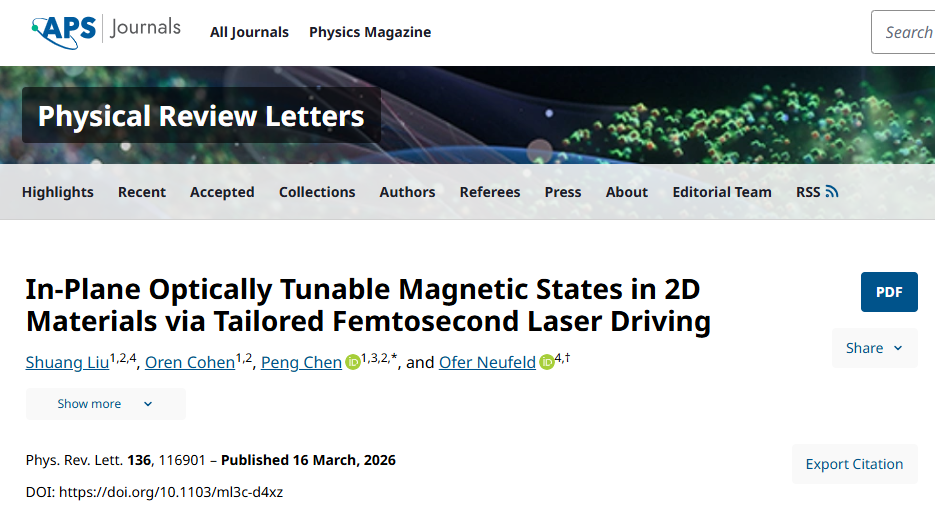
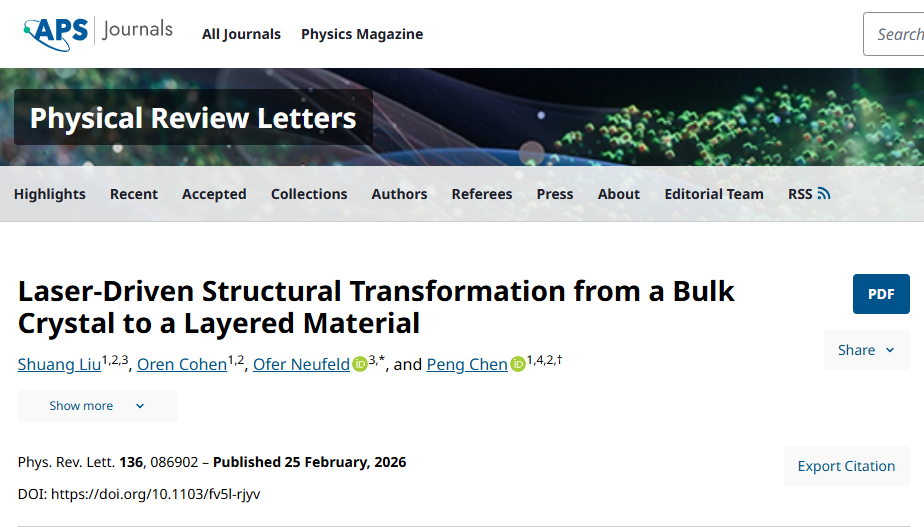
During his Ph.D., he has published two papers in the top physics journal, Physical Review Letters. In the first study, he and his collaborators theoretically revealed for the first time that laser driving can induce a phase transition in a bulk material (3D), directly transforming it into a layered material (2D). This finding expands understanding of laser-controlled structural phase transitions in materials and provides a novel theoretical approach for exfoliating 2D materials via optical means. In the second study, they demonstrated that tailored femtosecond lasers can generate tunable in-plane magnetic states in 2D non-magnetic materials, and provided the first theoretical evidence that intense two-color laser fields can generate and coherently control magnetization in all spatial directions of 2D materials. This lays a solid theoretical foundation for developing ultrafast spintronic devices based on optically controlled magnetism.
He believed the most important thing in Ph.D. was to find a problem truly worth solving, coupled with the patience to explore complex issues. High-level academic writing, communication, and teamwork skills are equally indispensable.
As for how to find a field to delve into, he saw it as a close alignment between personal interest and platform resources. Liu Shuang was deeply curious about "light-matter interactions", and GTIIT has a top-tier faculty team and strong research foundations in this area, allowing him to smoothly delve into it.
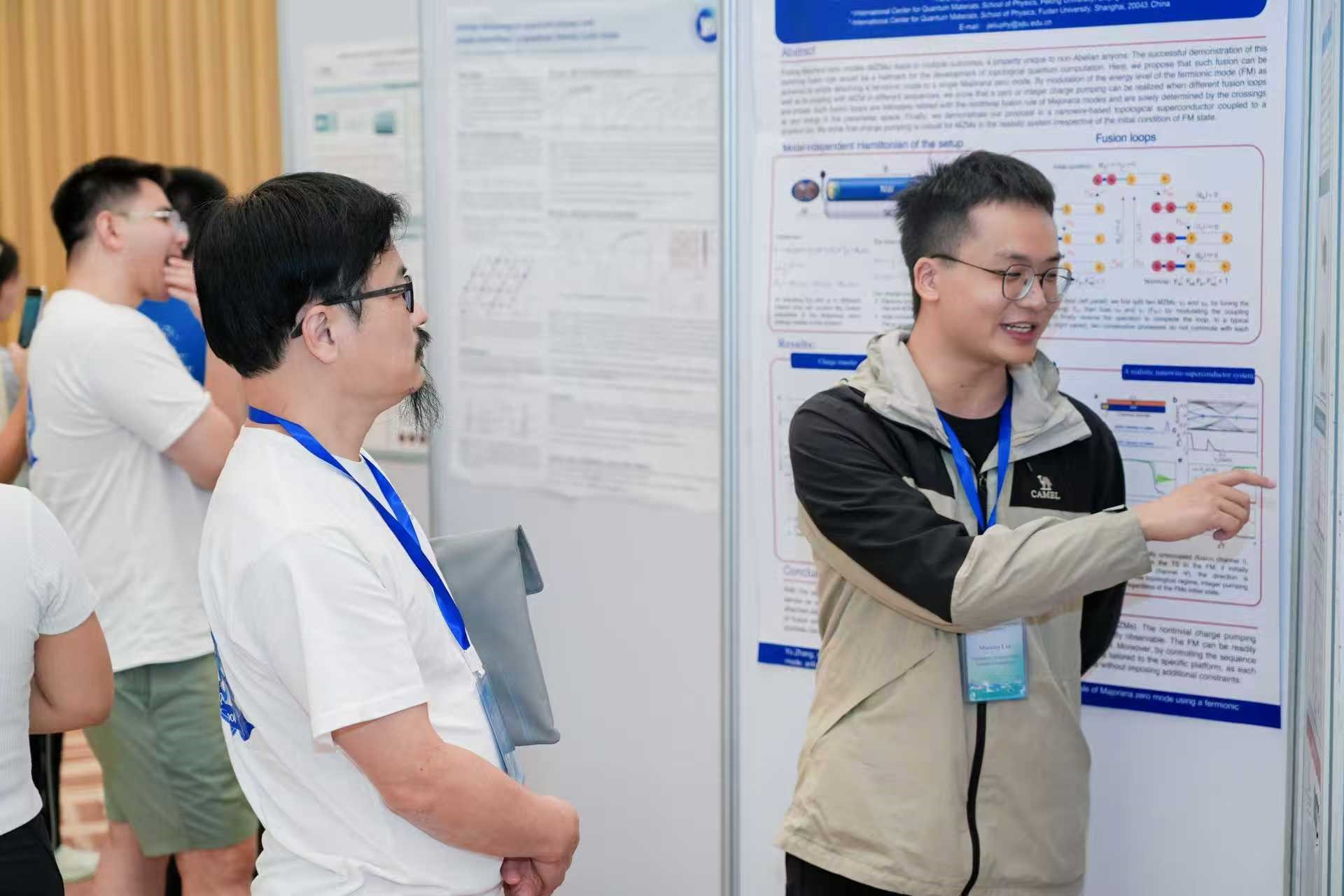
His advice to aspiring young researchers: "The most important thing is to find a direction you are truly passionate about and proactively communicate with professors in that field. As long as you are willing to take that step, you will gain an excellent opportunity to start your research journey. And with GTIIT's unique training background and solid academic achievements, you will surely stand out from the sea of identical resumes."
Text/Photos: GTIIT News & Public Affairs, Liu Shuang