PostTime:6/8/2026
In 2026, the sixth cohort of undergraduate graduates from Guangdong Technion – Israel Institute of Technology (GTIIT) is ready to set sail. Armed with the knowledge and courage bestowed by their alma mater, and guided by the belief of "Dream it. Do it.", they have etched their youth in constant exploration and breakthrough. Let us step into their stories, and witness how they take action as wings to wider skies.
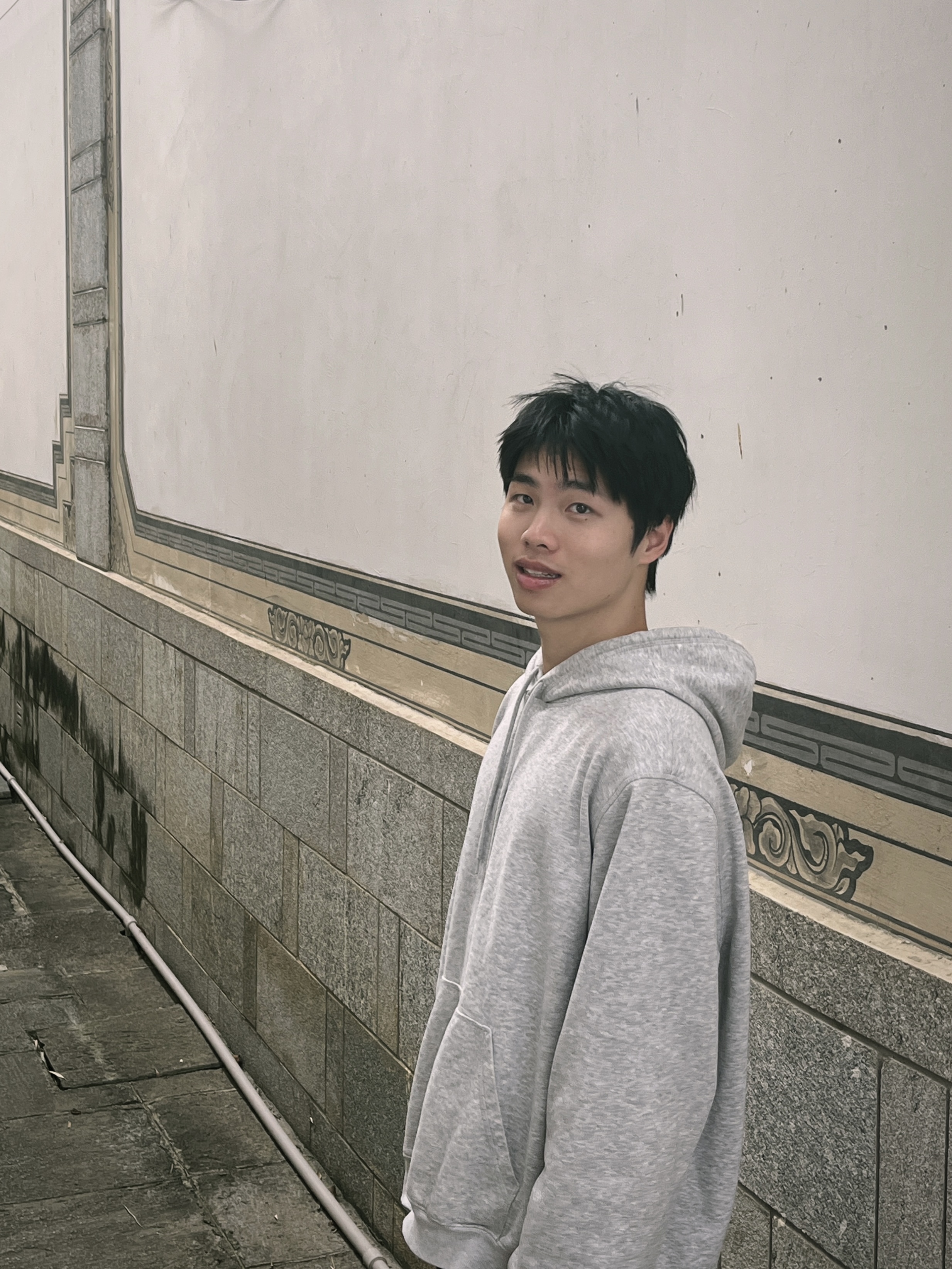
Name: Guo Hao
High School: Guangzhou Yucai Middle School
Program: Mathematics with Computer Science (MCS)
Awards: GTIIT Dean's List (2022-2023 & 2023-2024 & 2024-2025)
Offers:
University of Illinois Urbana-Champaign (Computer Science)
Johns Hopkins University (Computer Science)
New York University (Computer Science)
National University of Singapore (Financial Engineering)
University of Washington (Computational Finance and Risk Management)
Johns Hopkins University (Financial Mathematics)
Columbia University (Applied Mathematics)
The Chinese University of Hong Kong (Artificial Intelligence Science)
With a passion for mathematics with computer science, Guo Hao found the ideal environment to grow at GTIIT. Embracing the idea of "slow down to speed up", he built a solid foundation for steady progress. GTIIT enabled him to take root through rigorous mathematical training, and with down-to-earth effort, he stepped into a broader world.
Slow down to speed up
"I've always enjoyed math, especially when I go from having no clue to finally figuring it out." MCS program was the perfect fit—it let him dive deep into logical reasoning while also applying his thinking through coding and algorithms. Although he was initially admitted to Mechanical Engineering and Robotics program, his passion for math and programming led him to switch to MCS.
In his view, GTIIT's curriculum stands out for how tightly it weaves math and computer science together, building step by step from fundamentals to advanced topics. From calculus and linear algebra to data structures and system programming, a solid foundation early on made the harder stuff later much more manageable. "This structure makes sense," he said. "Only when you've mastered the basics can you truly understand higher-level knowledge."
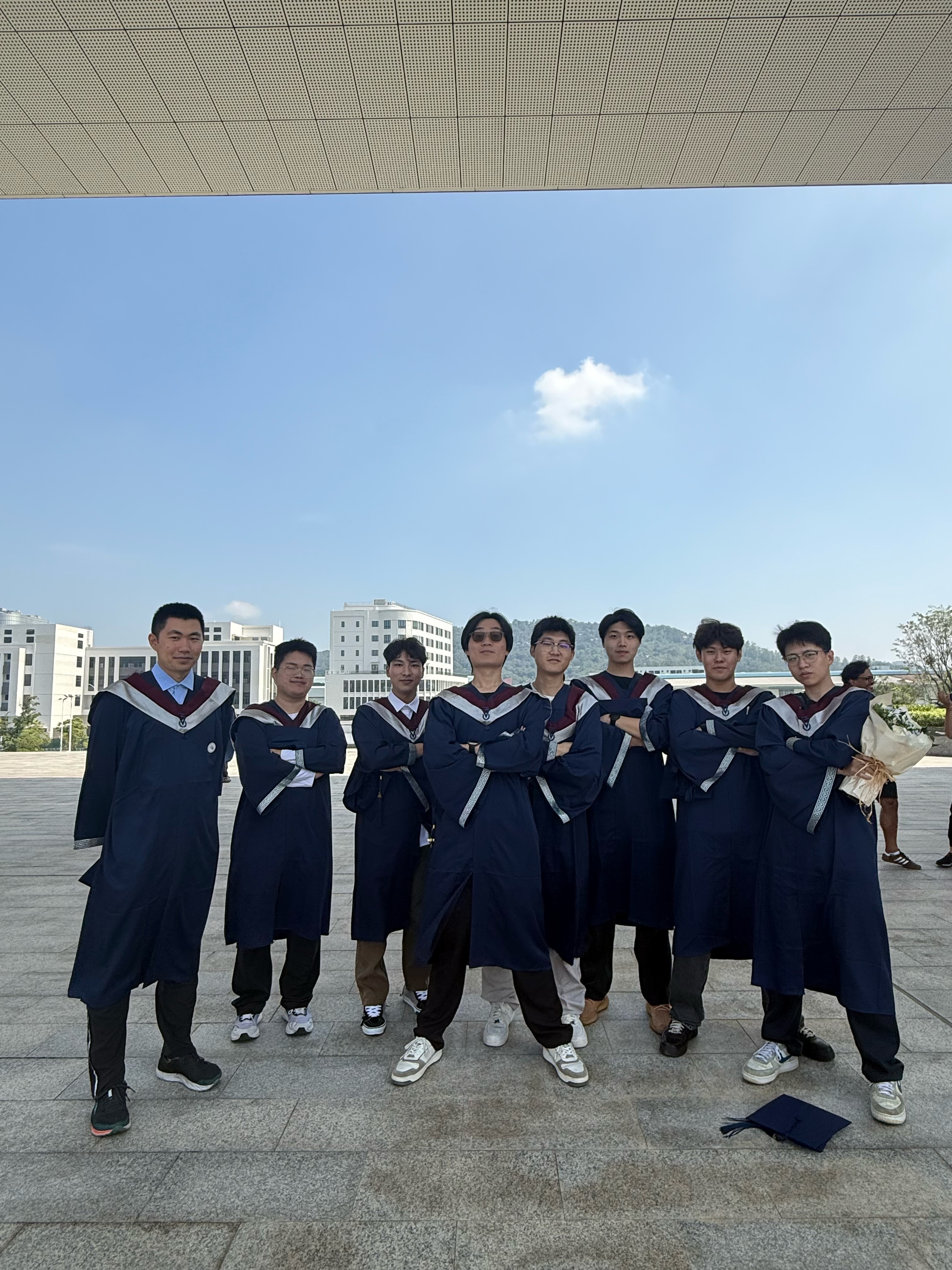
Guo Hao (right 3)
When asked about the hardest part of MCS, Guo Hao said it was its abstract nature. "Many math courses start with definitions, then move to theorems and proofs. If you don't fully grasp the definitions, it's tough to keep up." Early on as a new student, he felt lost due to the combination of abstract content and an English teaching environment. After being placed in a mandatory reduced-course load semester, his pace slowed down significantly.
"But looking back, that slower period actually helped me readjust to how this program should be learned." He realized that math can't be rushed. He had to be patient and work through every definition, theorem, and proof step by step. When he hit a wall, he would proactively ask professors, teaching assistants, or classmates for help. A different perspective often made things click. Over time, he found his own rhythm, his learning stabilized, and his efficiency improved. The advanced knowledge came much more smoothly, and he eventually caught up with his peers.
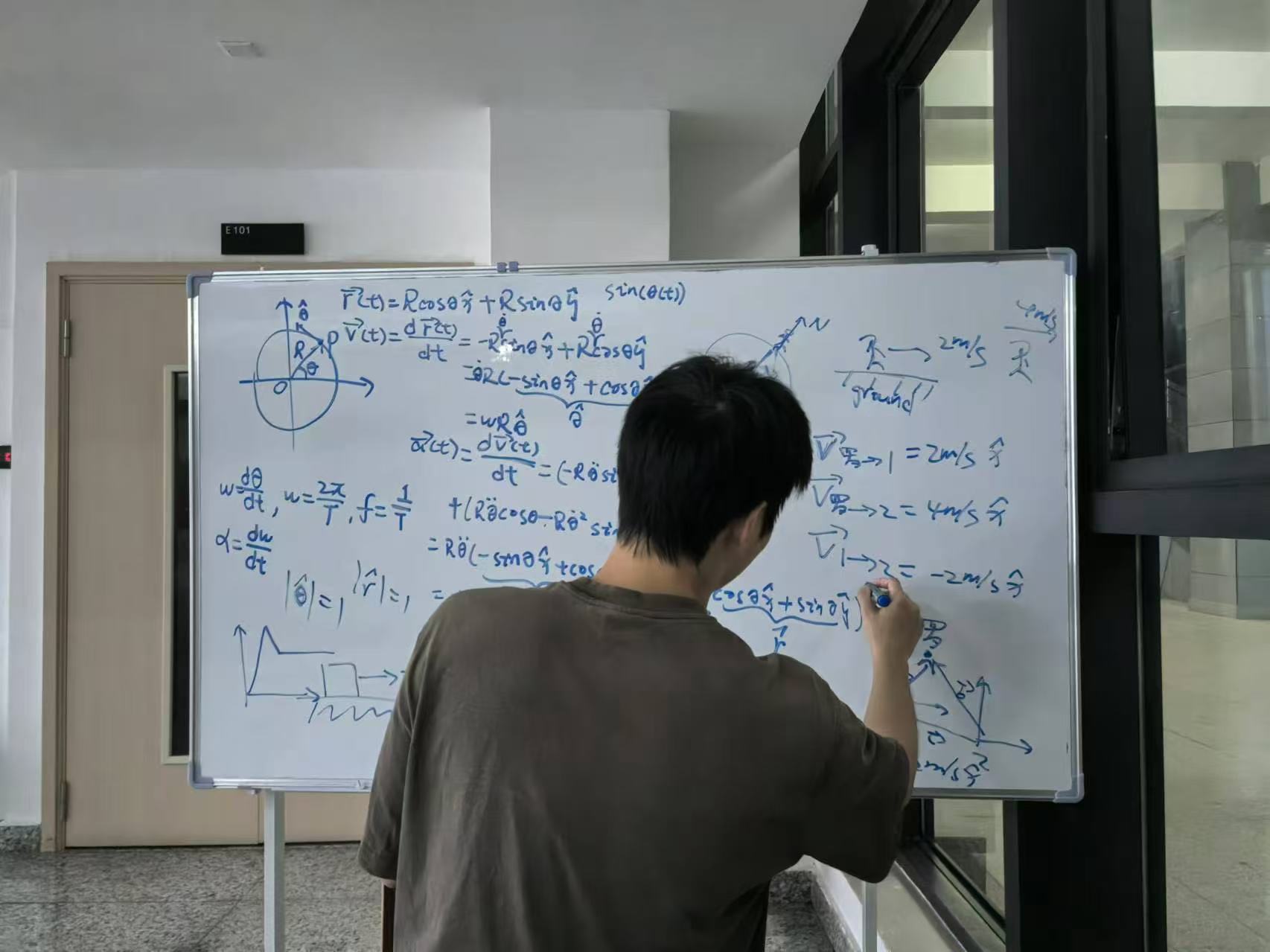
Guo Hao served as a peer tutor for physics class
He described his learning as "slow down to speed up". "Starting slow isn't a bad thing. As long as you build a strong foundation and find the right approach, you'll actually go faster and more steadily later on." This experience stripped away his fear of difficult problems and built up his confidence in independent thinking and problem-solving. "Everyone has their own pace. Find what works for you, and take it step by step." He suggested.
Go wide to know better
After studying at GTIIT, Guo Hao's biggest gain from the MCS program is its strong "expandability". "It's not just about learning knowledge—it's about developing skills that can be applied to further study or transferred to many different fields." On one hand, a deep math foundation opens doors to research. On the other, the logical thinking, modeling, and problem-solving skills are valuable across industries.
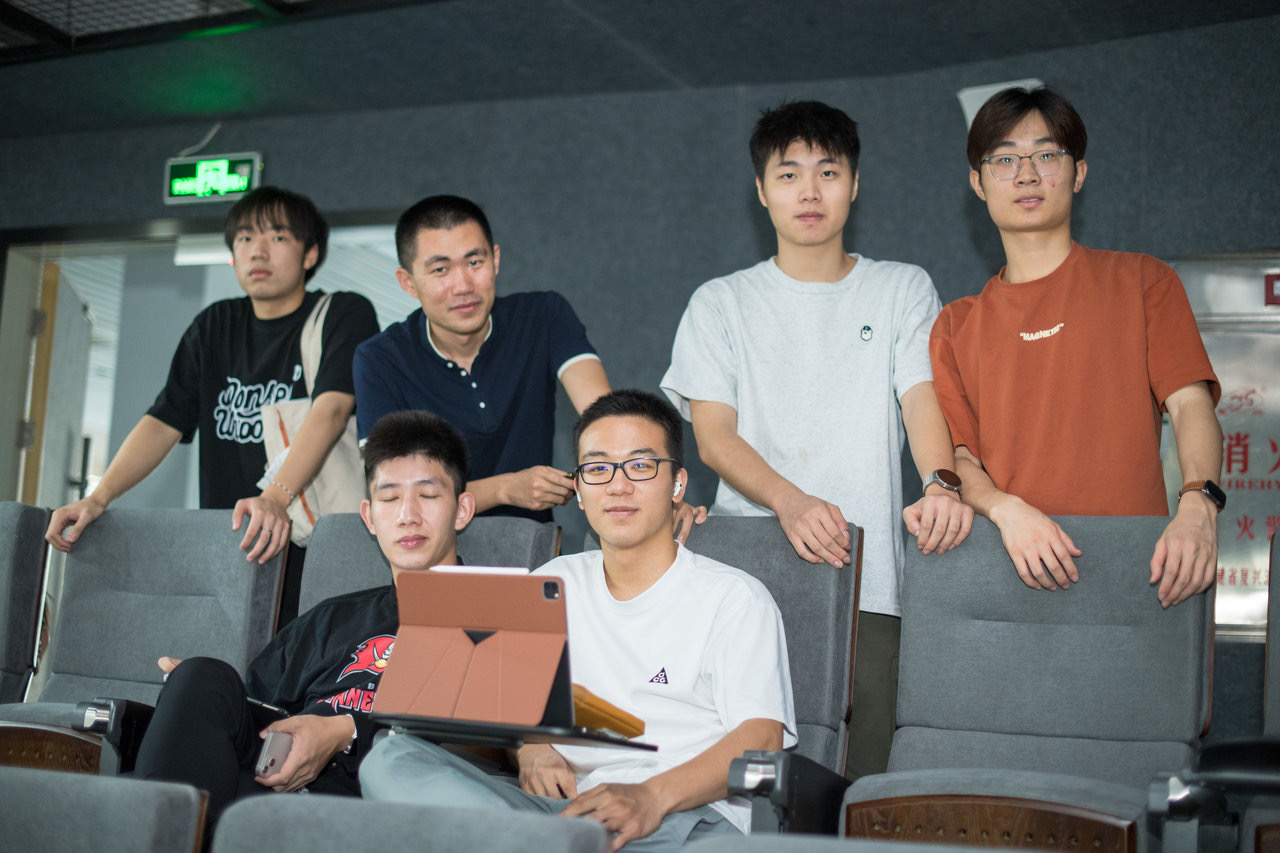
GT Start-Up Challenge team group photo (Guo Hao is 2nd from the right)
His internship experience proves the point. At a private equity fund, he worked on developing quantitative trading strategies—writing programs to process historical A-share market data, filter stocks, identify trends and key turning points, and generate trading signals. "Compared to pure theory, I care more about applying knowledge to real-world scenarios. Quantitative trading combines math, statistics, and computer science. It uses data and models to make decisions, not gut feelings—that really appeals to me." For graduate study, he planned to pursue a master's in financial engineering, building on GTIIT's solid foundation to dig deeper into quantitative finance.
In the age of AI, he keeps a clear head. "We can't just accept answers. What really matters is the ability to ask questions, evaluate answers, and reframe problems." He saw AI as a powerful productivity tool, but he never relied on it for ready-made answers. Instead, he leaned on his solid math foundation to judge and question. This "problem-driven" mindset aligns perfectly with GTIIT's teaching philosophy. Professors here encourage students to ask questions, challenge authority, and get to the heart of issues through discussion. This training has not only taught him how to use tools but also how to ask good questions and make independent judgments.
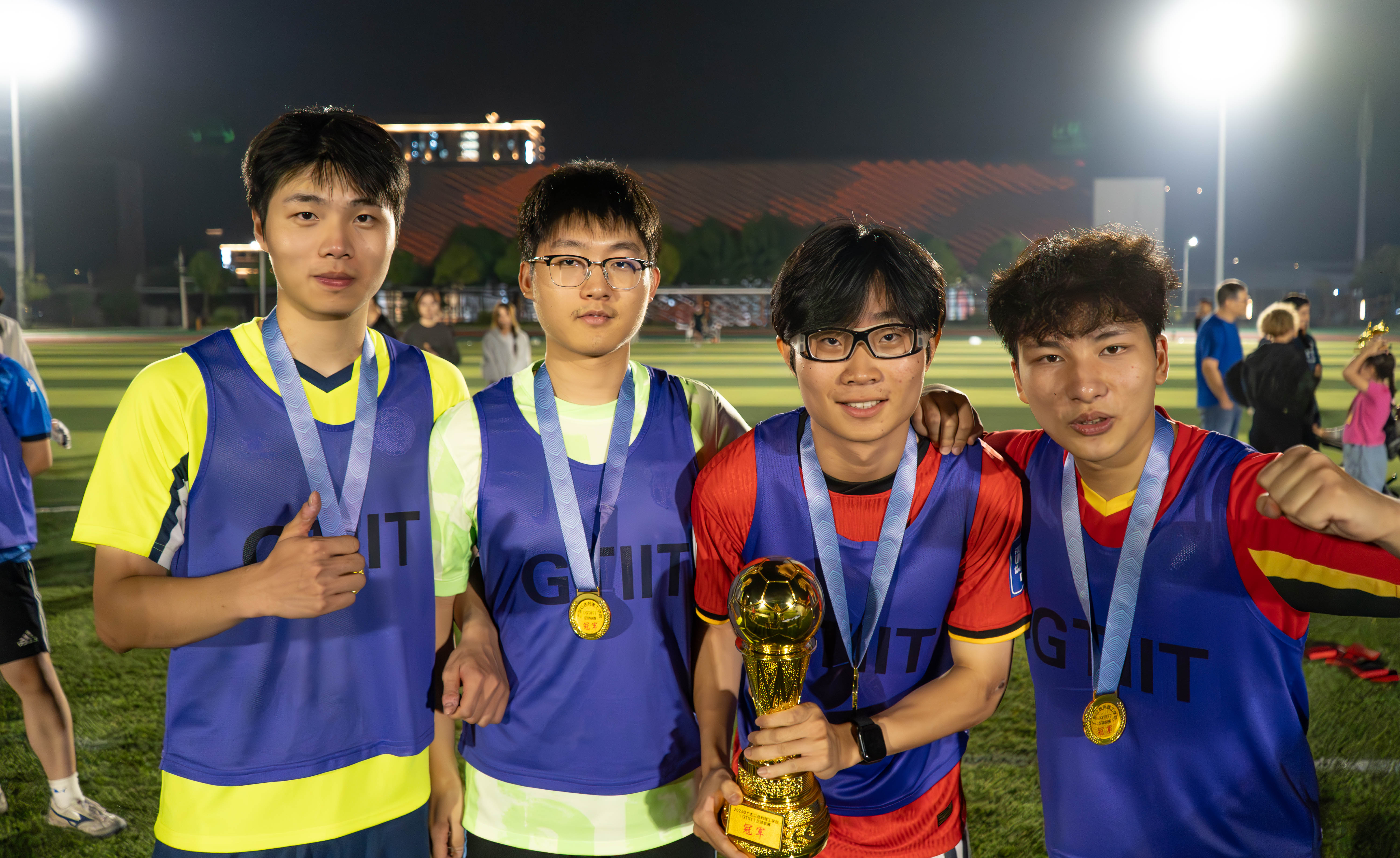
GT soccer league championship photo (Guo Hao is 1st from the left)
Outside of class, he loves soccer and once won the GTIIT soccer league championship with his team. He joined the university's swim team and took part in GTIIT Start-Up Challenge, going through the whole process from idea conception and market analysis to writing a business plan. He advised the junior students to explore early, try new things, find what you love, and go after it with action.