PostTime:6/29/2026
In 2026, the sixth cohort of undergraduate graduates from Guangdong Technion – Israel Institute of Technology (GTIIT) is ready to set sail. Armed with the knowledge and courage bestowed by their alma mater, and guided by the belief of "Dream it. Do it.", they have etched their youth in constant exploration and breakthrough. Let us step into their stories, and witness how they take action as wings to wider skies.
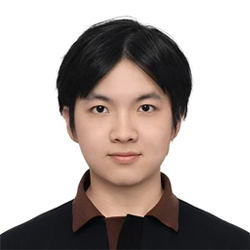
Name: Zhang Chuhan
High School: Fuzhou No.8 High School
Program: Mechanical Engineering and Robotics (MER)
Awards:
GTIIT Dean's List Academic Scholarship
Offer:
Yale University (Mechanical Engineering)
University of Michigan, Ann Arbor (Mechanical Engineering)
Johns Hopkins University (Mechanical Engineering & Robotics)
The University of Hong Kong (Mechanical Engineering)
The Chinese University of Hong Kong (Mechanical and Automation Engineering)
During the pandemic, GTIIT's independent admissions pathway opened, which changed Chuhan's plan to study in Canada. Once he joined this international STEM university, the dream of building physical robots that had stayed with him since his high school competition days finally took root.
Stay focused, learn deep, build a solid foundation
"I really enjoy playing with physical robots. They turn your ideas into simulations, then deployment, step by step." Shortly after enrollment, a conversation with Professor Liu Mingyi of MER program made one thing clear: university-level research isn't just about "making a robot." It requires solid academic grounding and extensive reading to find your niche — only then can you truly close the loop from ideation to deployment.
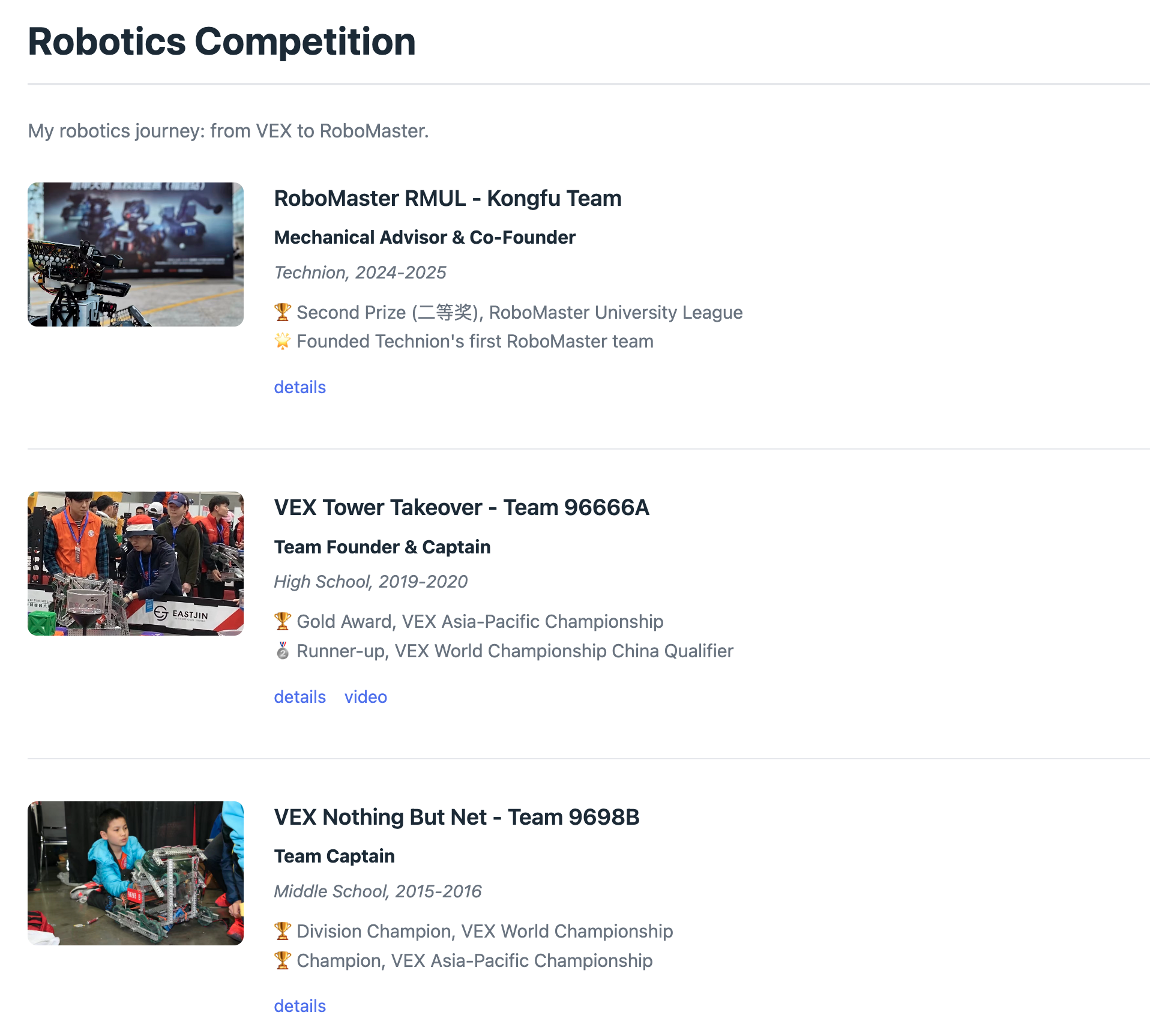
Competition Resume from Chuhan's Website
In his first two years, Chuhan threw himself into foundational courses. GTIIT's unique curriculum became the perfect soil for building a strong knowledge base. "Few courses here let you ace the class with just a final exam," he explained. "Most have continuous assessment — homework, labs, projects, class participation. Learning is ongoing, not a one-week cram session."
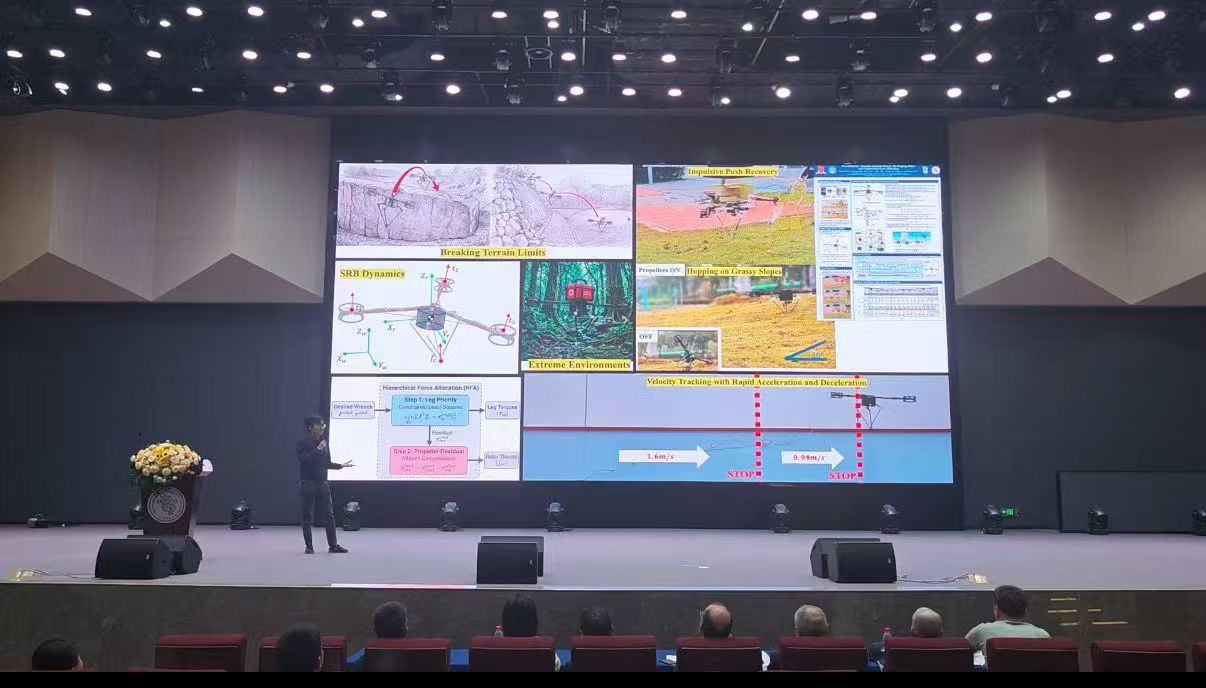
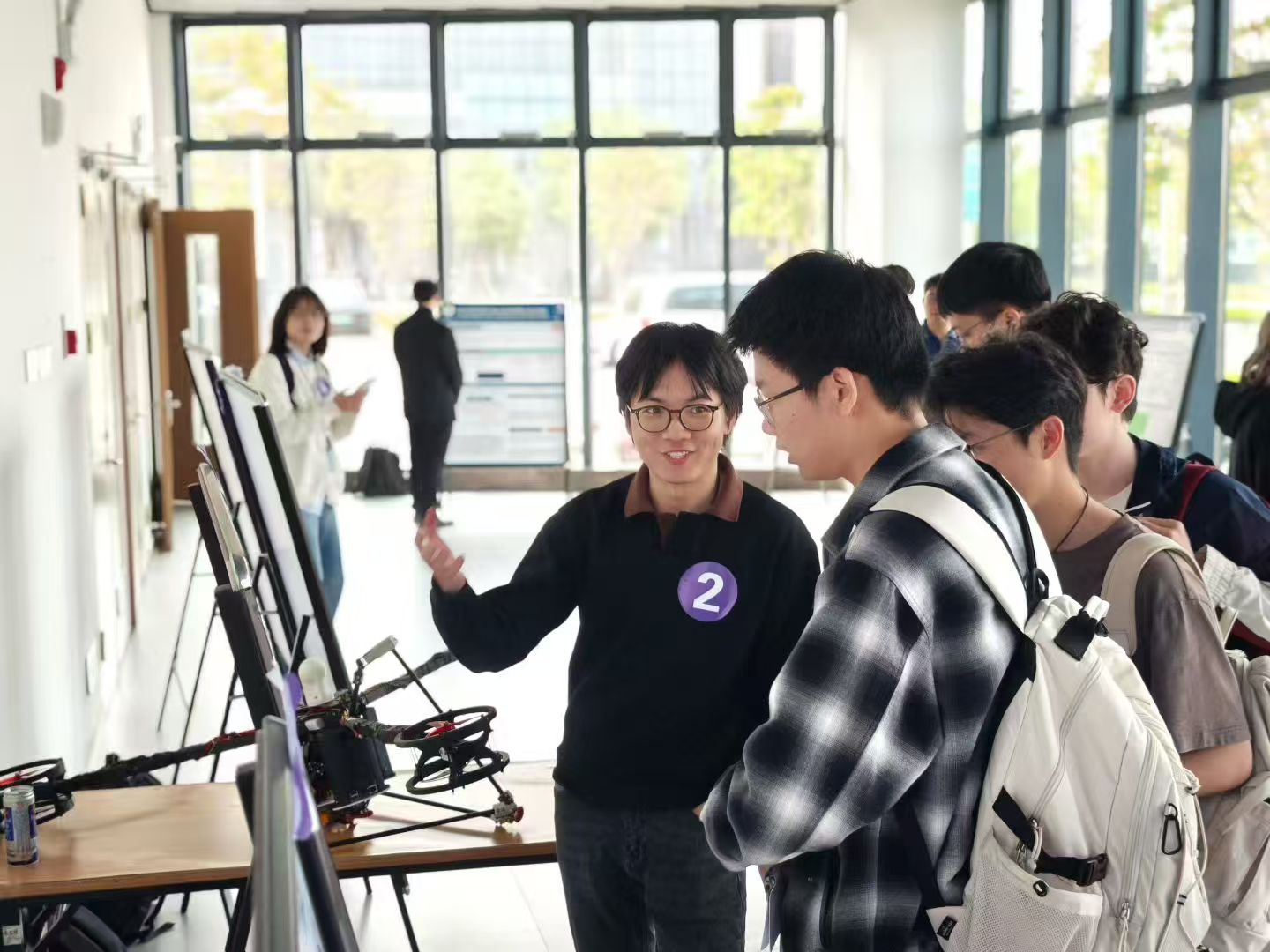
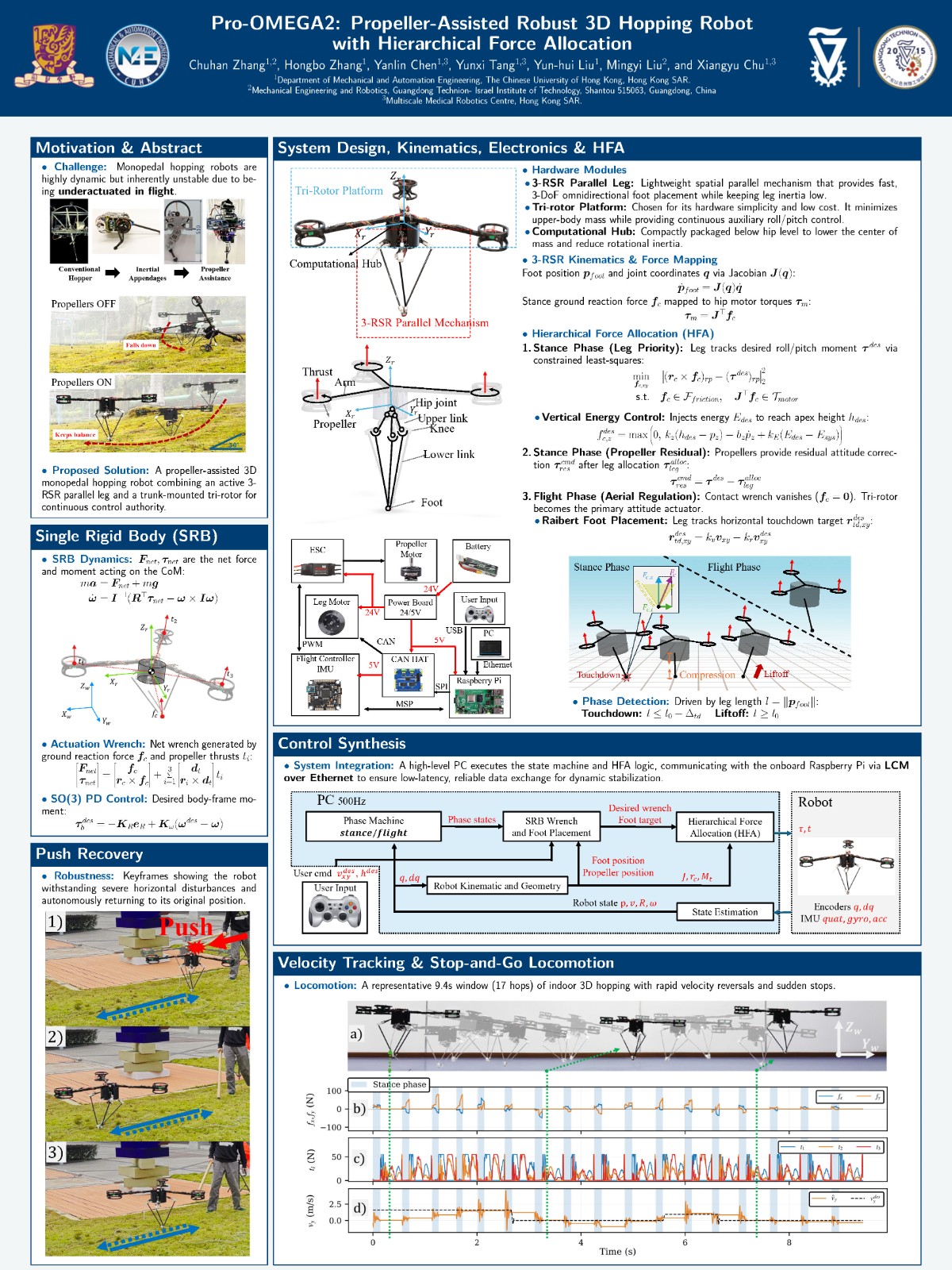
MER Poster Exhibition
To quickly adapt to English-medium instruction, he took interactive, high-level English electives like Technical English Communication, fully committing to every presentation. In Connie's class, he systematically learned the thinking and techniques behind the language, and found himself drawn to its charm through her warm, humorous teaching style.
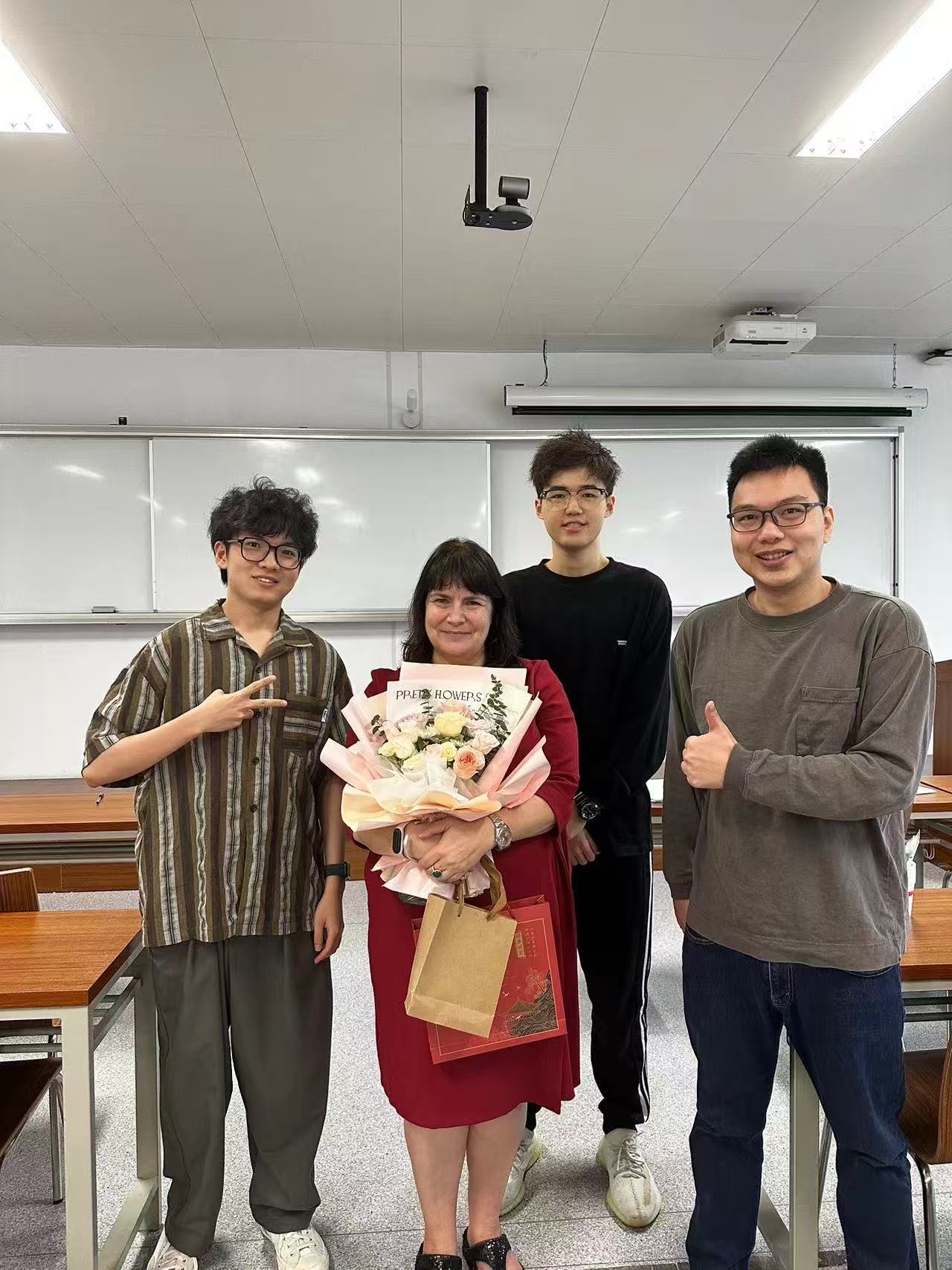
Photo with Connie
The toughest challenge was the Algebra Extended course. He developed a three-step strategy: first, discuss homework with classmates to clarify ideas; second, find supplementary lectures on YouTube to fully understand tricky points; third, save the hardest parts for office hours. "When talking with professors, don't just ask 'how to solve this.' Ask 'why was this definition established this way, and how does it connect to what we learned before?'"
With this approach — connecting dots and digging for root causes — difficult problems began to unravel. "You didn’t get it suddenly. You get it when things started to connect. Once I could link those abstract concepts back to linear algebra and proof strategies, the course was not that hard anymore."
Follow, replicate, get the full picture
In his sophomore year, Chuhan joined Professor Liu Mingyi's research group, working on improving locomotion energy efficiency and stability of legged robot by energy recycling.
The research connected mechanics knowledge and allowed him to start with a clean, well-structured walking robot model, completing the full process from modeling to simulation to design to experimentation. "This project taught me that robot research can start from understanding the essence of movement, rather than diving into overly complex systems from the get-go."
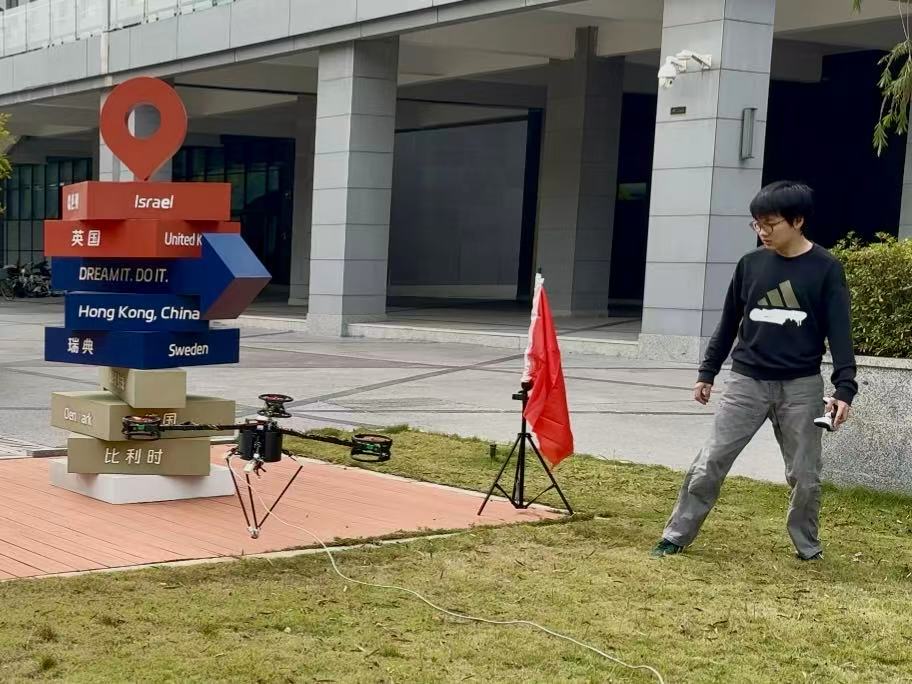
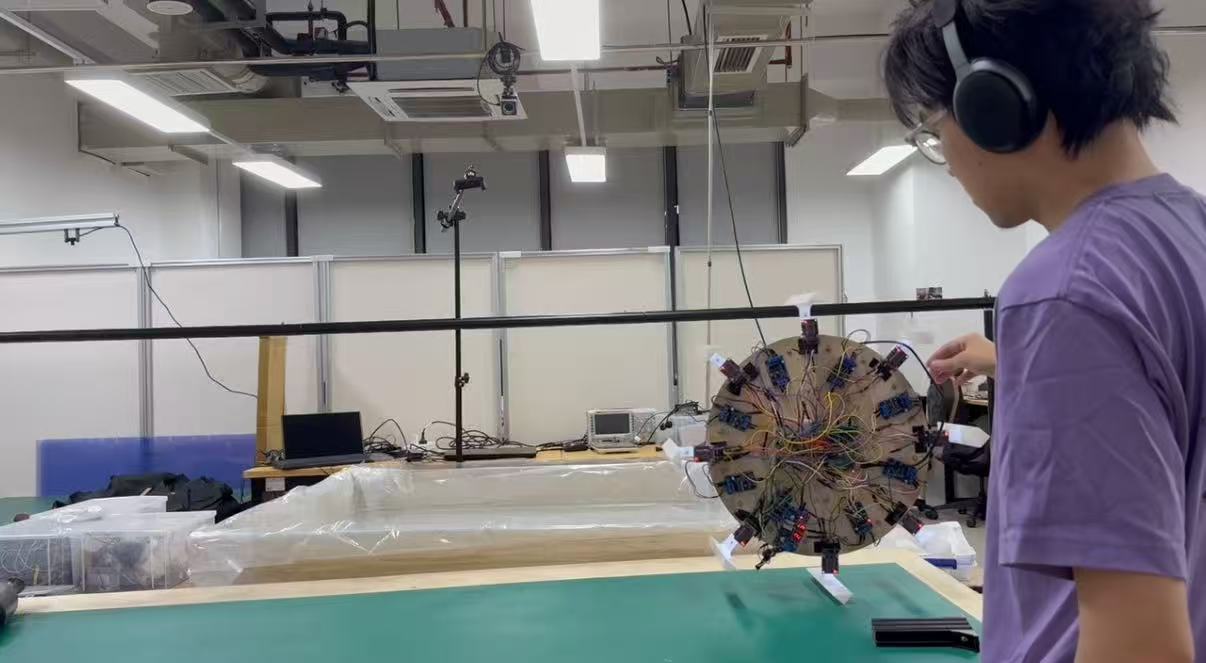
Robot testing
He often felt fortunate for the support of his mentors and peers. "Professor Liu and the senior students didn't just hand me a difficult project. They gave me code and files that already worked, with successful results. I taught myself, reproduced their work, understood the modeling, simulation, and experimental processes — built my foundation. Then we split up the work and moved forward."
That whole 'guide-first-then-let-go' approach, plus patience and clear direction — a real undergrad-friendly setup — turned Chuhan from someone who knew how to "take classes" to someone who could "do research." With a solid foundation, he applied to join CUHK as a research assistant in the summer of his junior year, working on 3D hopping locomotion for a hopping robot project — work he continues to this day.
"The work involves both hardware and control algorithms. I'm responsible for hardware integration and embedded development of the 3-RSR parallel leg, while also contributing to the design and implementation of a hierarchical control framework." Through this experience, he completed the full pipeline for the first time — from algorithms to embedded systems to experimental validation, building a complete R&D map for robots.
The project eventually achieved continuous 3D hopping outdoors, with quick recovery even under significant disturbances. A related paper has been accepted at IEEE CASE 2026 — a top international conference in automation — and the work is now advancing toward multimodal reinforcement learning.
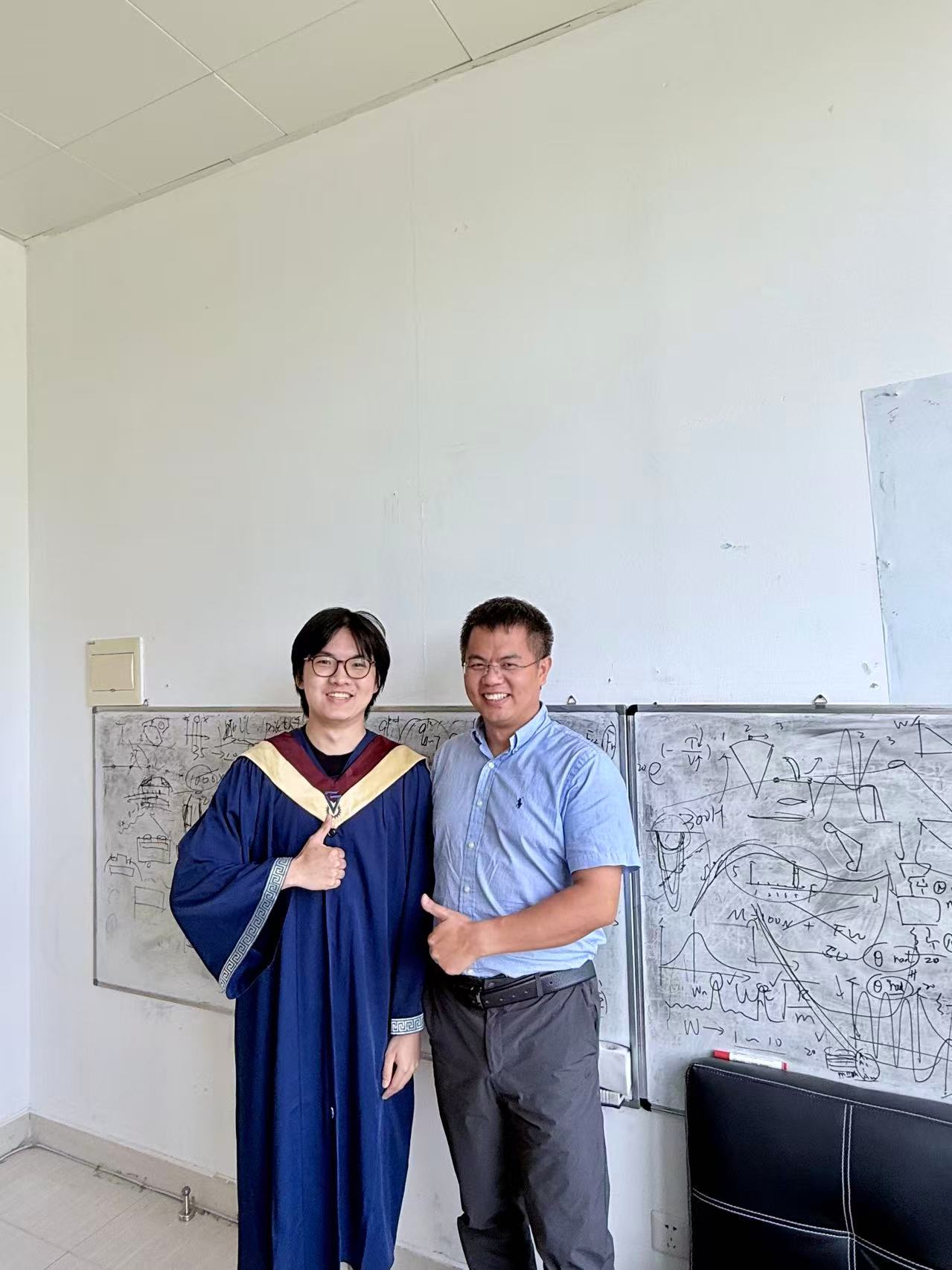
Photo with Prof. Liu Mingyi
"Throughout college, I've been seeking opportunities related to physical robots." Outside academics, he co-founded GTIIT's first student robotics team, "Kongfu Team," and won second prize in the infantry combat competition at RoboMaster 2025 (Fujian regional). "Beyond applying what I learned in class to the real world, I also learned how to build efficient team workflows and effectively communicate with manufacturers."
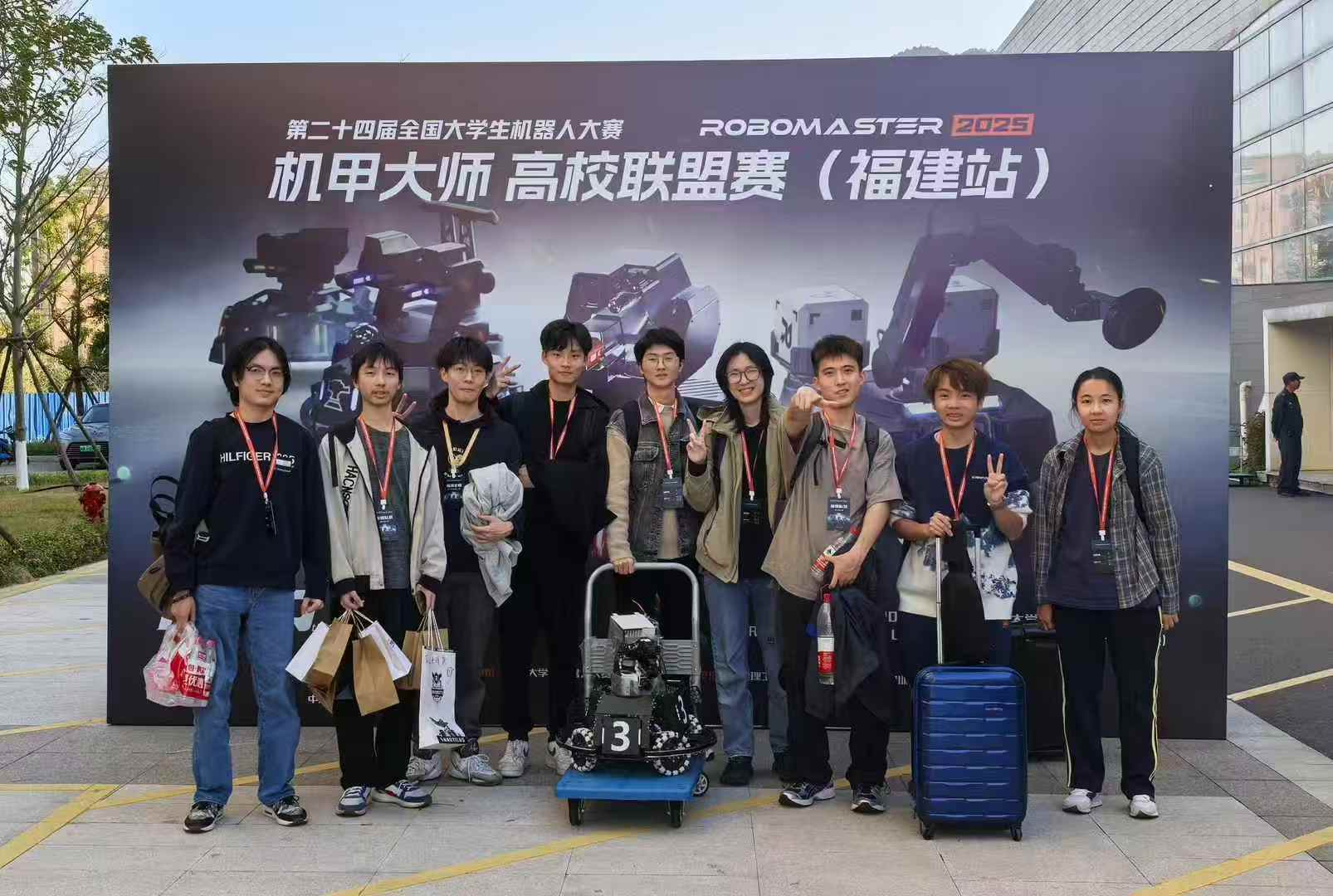
GTIIT Team in RoboMaster 2025
Chuhan is the leftmost
With four years of solid experience, Chuhan handled the entire application process himself and received offers from top institutions including Yale, the University of Hong Kong, and Johns Hopkins. The dream he nurtured as a teenager grew steadily in the right academic soil — and led him to a much broader world.
And before him, the inaugural cohort of GTIIT's MER major had already defined the power of this environment — over 53% admitted to world top 10 universities, over 80% to world top 30. More and more students are starting from here, embedding their passions into the gears of China's strategy to become a manufacturing powerhouse. They learn what they love, apply what they learn, and grow into the vibrant, powerful "underlying drive" of China's emerging robotics industry.
Text: GTIIT News & Public Affairs
Photos: provided by Zhang Chuhuan