PostTime:4/27/2026
Focusing on the forefront of technology and addressing the demands of the times, the courses of Guangdong Technion - Israel Institute of Technology (GTIIT) provide students with a solid foundation in science and engineering and strengthen their core disciplinary competencies through robust professional training and innovative instructional design. These courses not only forge students' hardcore capabilities but also ignite their enduring passion for exploring scientific truths.
The "GTIIT Course Exploration" series will take you into popular courses filled with hands-on practice and engaging fun among students.
Advanced Materials Laboratory 1N
Instructor: Xie Zuoti
This course is designed for MSE undergraduate students in their first semester of the senior year. Through systematic practical training, the course helps students integrate and apply their professional knowledge, while exploring their personal research interests along the way. The course includes eight experiments: Transmission Electron Microscopy (TEM), Scanning Electron Microscopy (SEM), Atomic Force Microscopy (AFM), X-ray Diffraction Analysis (XRD), 3D Printing, Lithium-Ion Batteries, Metallographic Optical Microscopy, and Chemical Vapor Deposition (CVD). These experiments cover the primary instruments and equipment used in materials research, integrating the fundamental processes of material preparation, characterization, and performance testing.
The lab sessions are conducted in a small-group format, with 2–3 students per group. The course aims to equip students with the essential skills in experimental design, operation, and result analysis and presentation required for cutting-edge research in materials science and engineering. It provides every MSE undergraduate with practical research experience before embarking on their scientific careers. By engaging with advanced experimental methods, students will gain a solid understanding of the principles and operational procedures of the eight experiments, explore their research interests, and lay a necessary foundation for their upcoming graduation projects, further studies, or career pursuits as well.
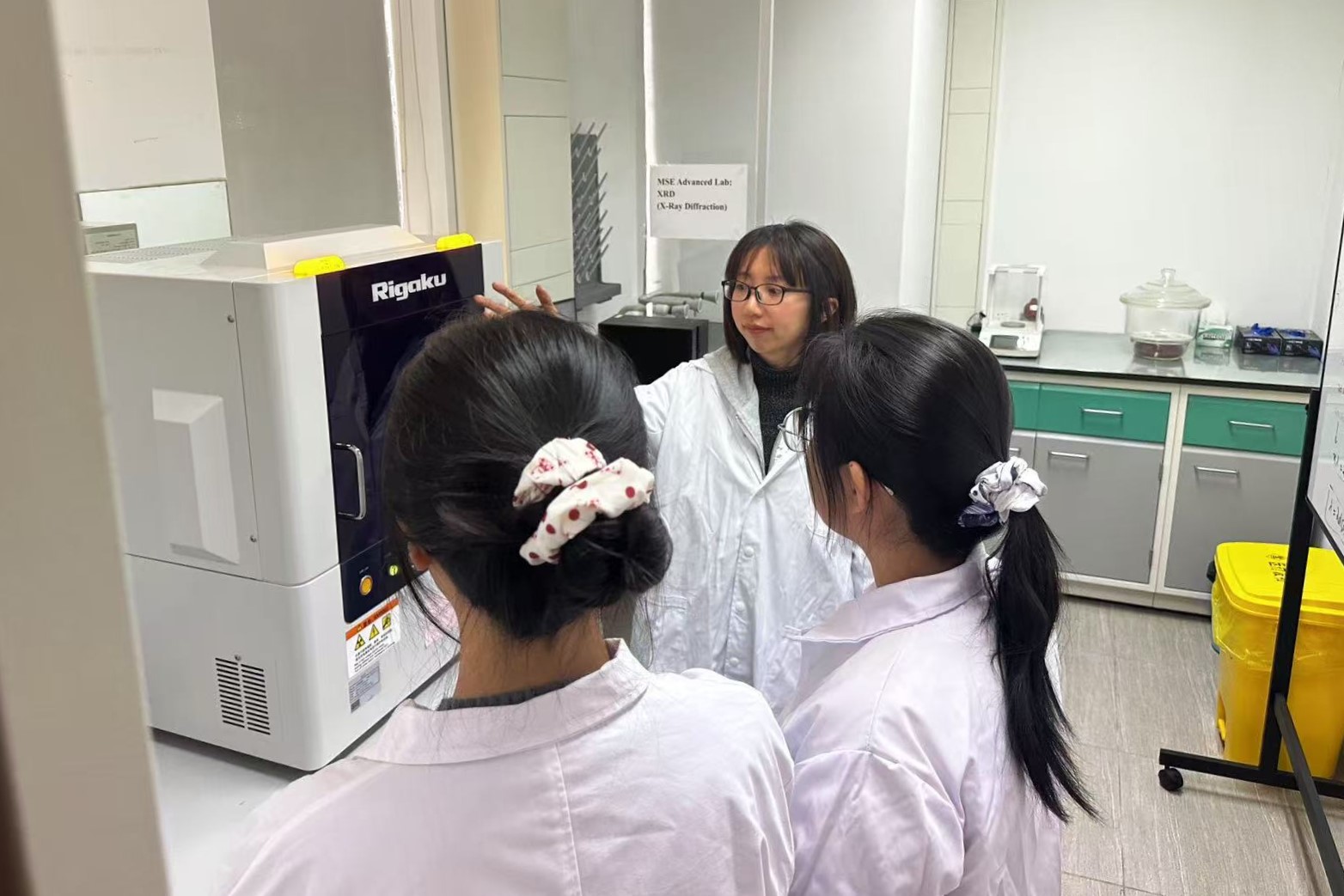
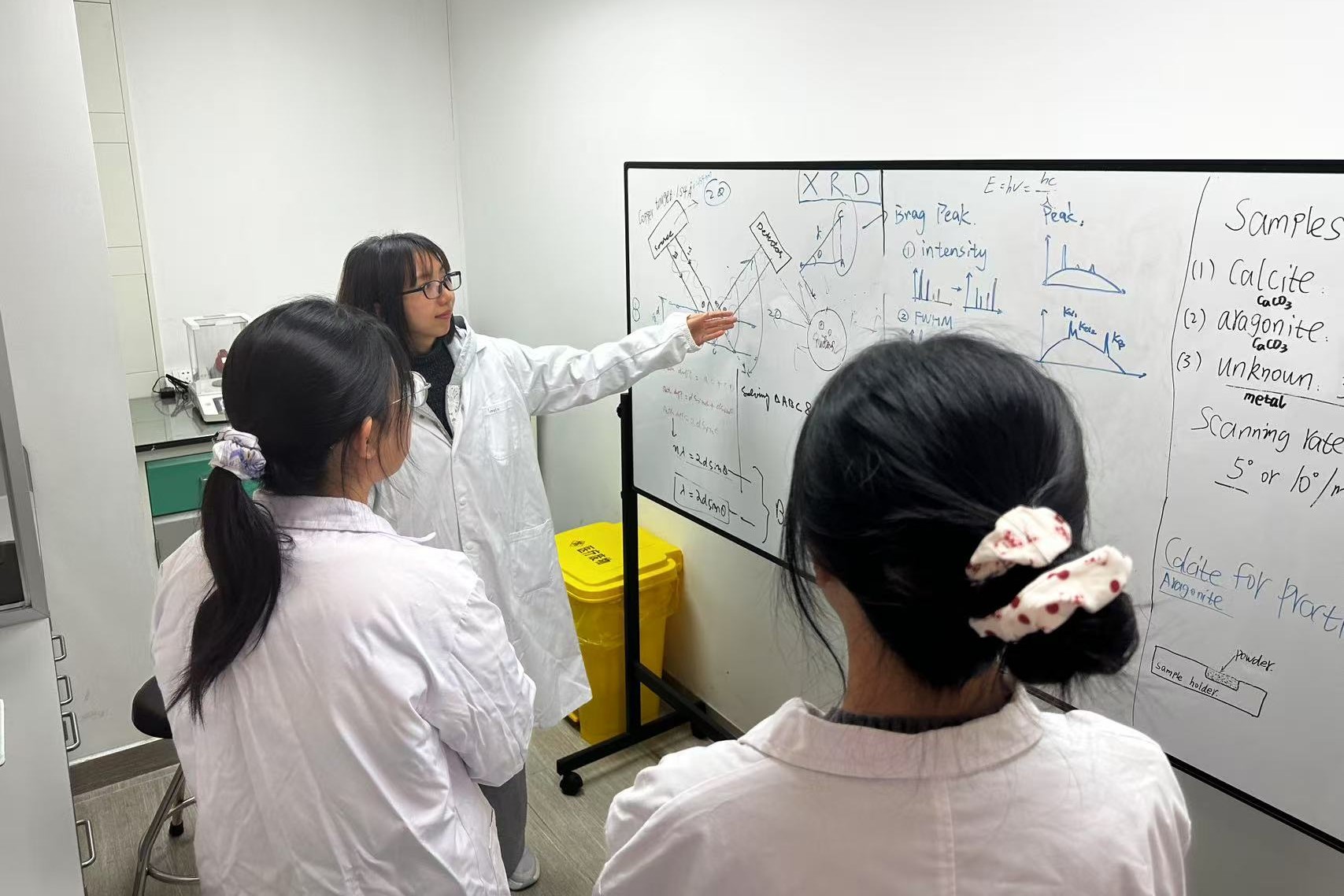
This course is highly engaging as it allows us to conduct hands-on experiments and learn the most essential characterization methods in materials science. It bridges theoretical knowledge from textbooks with practical applications, including the use of modern analytical techniques such as Transmission Electron Microscopy (TEM) and X-ray Diffraction (XRD). We gain exposure to practical applications like lithium battery testing and 3D printing of our own designs, and we witness firsthand how theoretical knowledge translates into real-world instruments and processes. By connecting theory with application, the course enables us to learn more deeply through hands-on experience and truly master the practical application of knowledge. (Hu Shennan, 22 MSE)
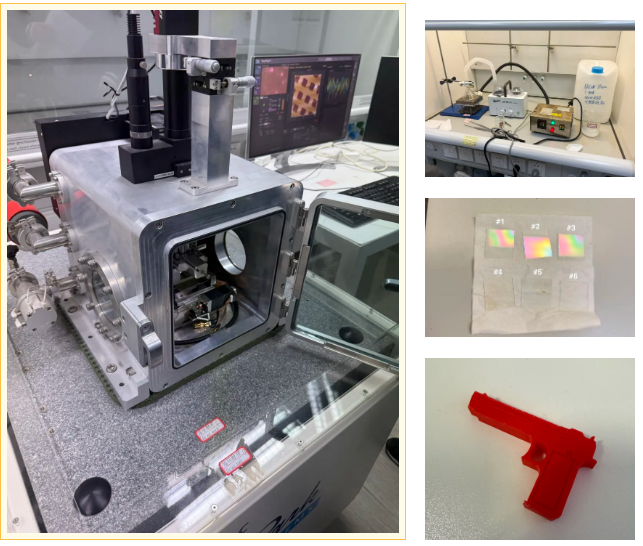
Atomic force microscopy for teaching (left); Self-assembled chemical vapor deposition setup (top right); Light scattering from glass at different CVD times (middle right); 3D-printed output (bottom right)
Fourier Series and Integral Transforms
Instructor: Ezequiel Rela
The course appears in the MSE-Phys program checklist in the 3rd semester. It is presented as an intermediate level course for MSE students pursuing the special Physics track. It is necessary to have a strong background in analysis to be able to follow the course. Much can be said and studied about Fourier series and Transforms. However, the course is mostly devoted to presenting the formal aspects of Fourier series and the Fourier Transform, covering core topics such as the basic properties about inner product spaces and convergence of Fourier series. Although it is a course for MSE, the course focuses on the mathematical foundations of Fourier series, offering the students a solid base to then confidently apply the tools presented in this course to more applied problems. The course consists in 2 hours of lecture and 1-hour tutorial, where the mathematical foundations and applications are presented.
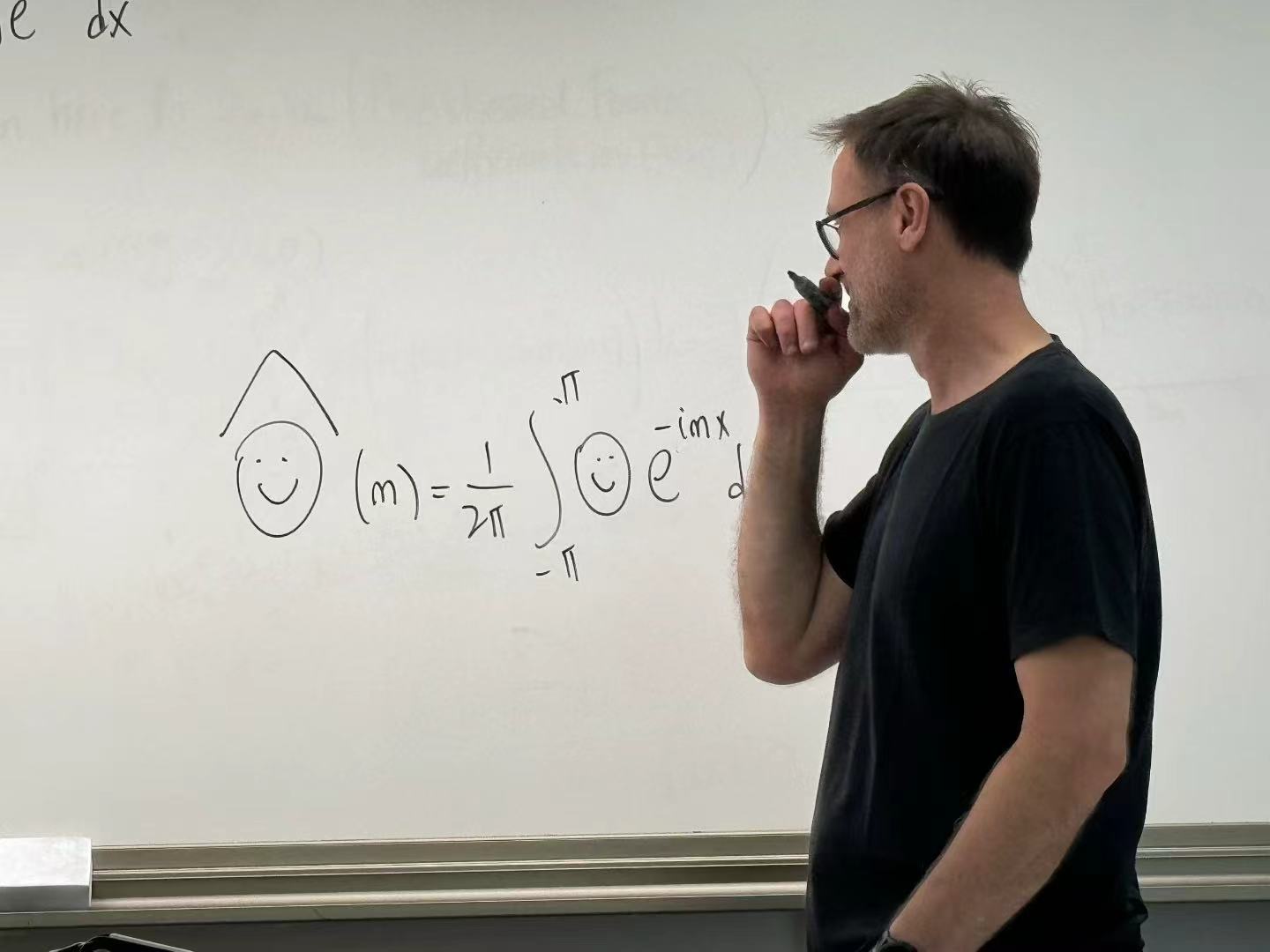
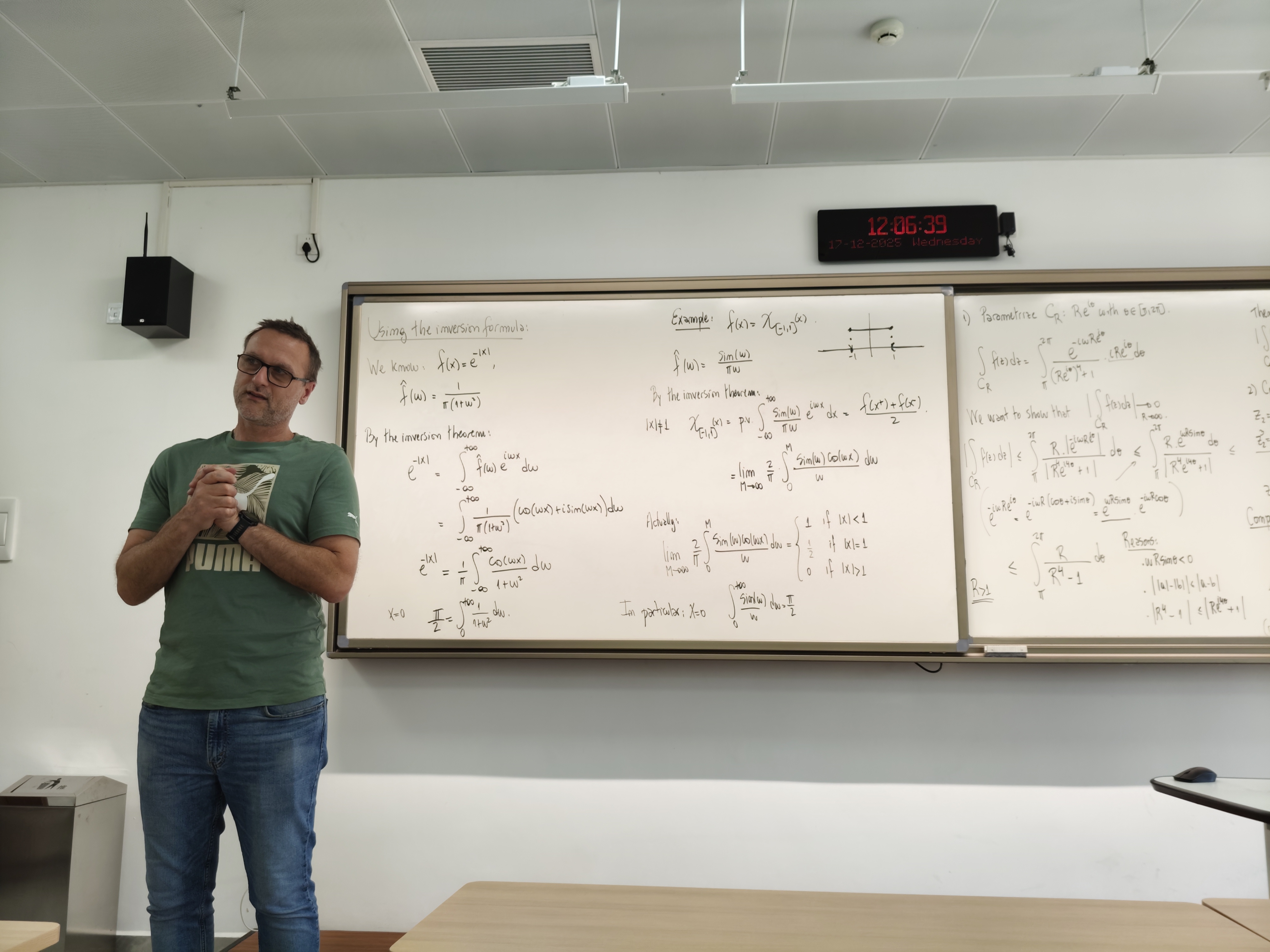
Prof. Rela's Fourier course was one of my favorites at GTIIT. Firstly, the inherent elegance of Fourier series and Fourier transforms themselves makes it hard not to enjoy the course. More importantly, the professor's teaching added significant charm to the course. His course was arranged in a logical, step-by-step progression, and he explained concepts with remarkable clarity. Beyond that, he used visualization software (like GeoGebra) to visualize the geometric intuition behind abstract mathematical derivations, making the classes more vivid and easier to understand. Additionally, the professor's humorous and engaging personality filled the class with joy and energy. (Chen Yuyang, 24MSE)

Thermodynamics of Material
Instructor: Elissaios Stavrou
From how we cook our food, why sun keeps as warm up to why during winter our tires have lower pressure and why ice-water mixture has constant temperature… the laws of thermodynamics are everywhere in daily life. The course is designed for second year MSE undergraduate students and focuses on the basic principles of thermodynamics, with emphasis on phenomena relevant with materials.
Through case studies, the course guides students to analyze and solve real-world problems—Why the eyes of humans are more sensitive to green light? Why vacuum is best to keep our coffee cold or hot? Why ice cubes stay on the surface of water? Why car tires might look flat during winter? In this course, students will learn how to use the basic principles of thermodynamics to explain these common phenomena and master how to apply these basic rules in almost any system they might encounter in their scientific career.
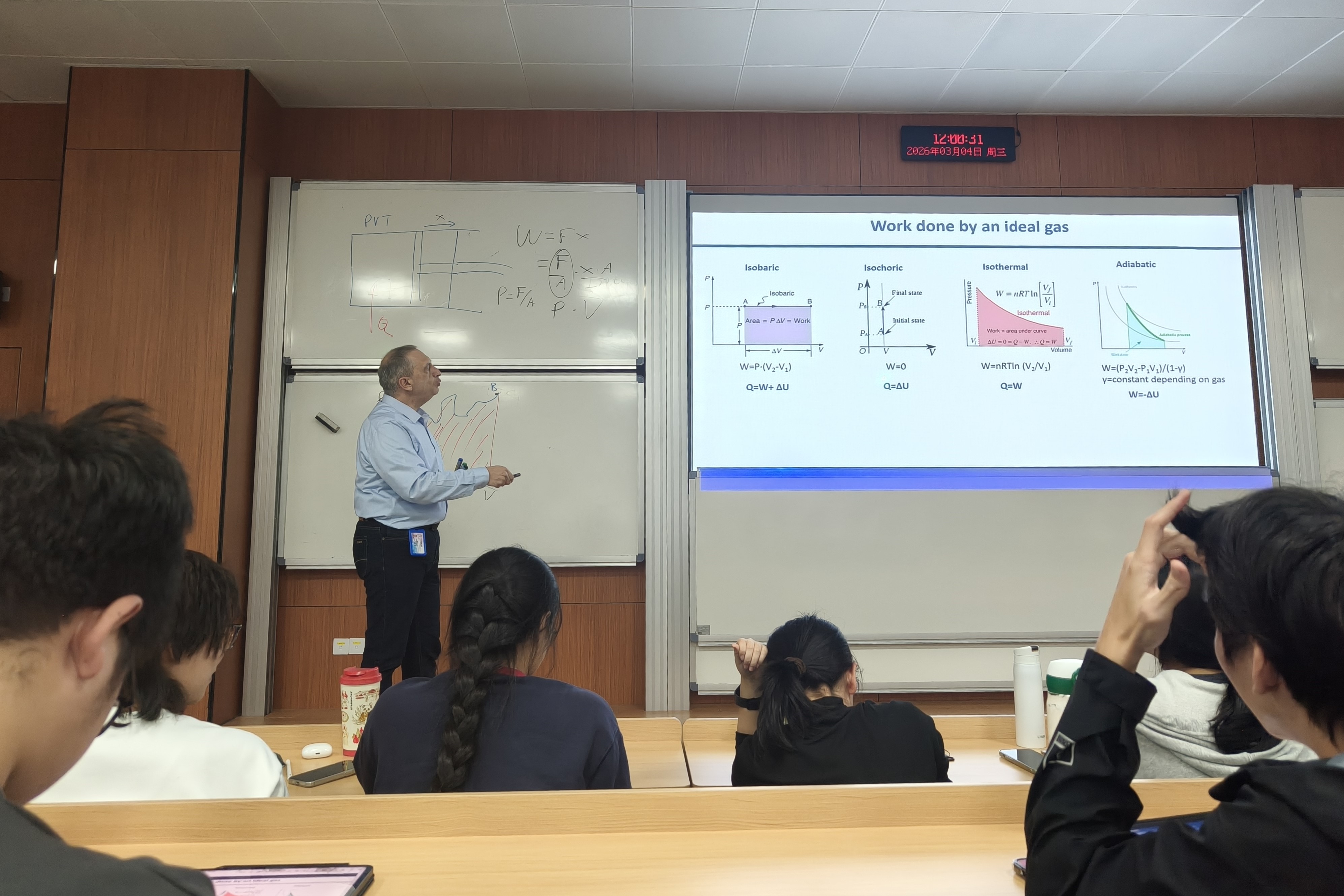
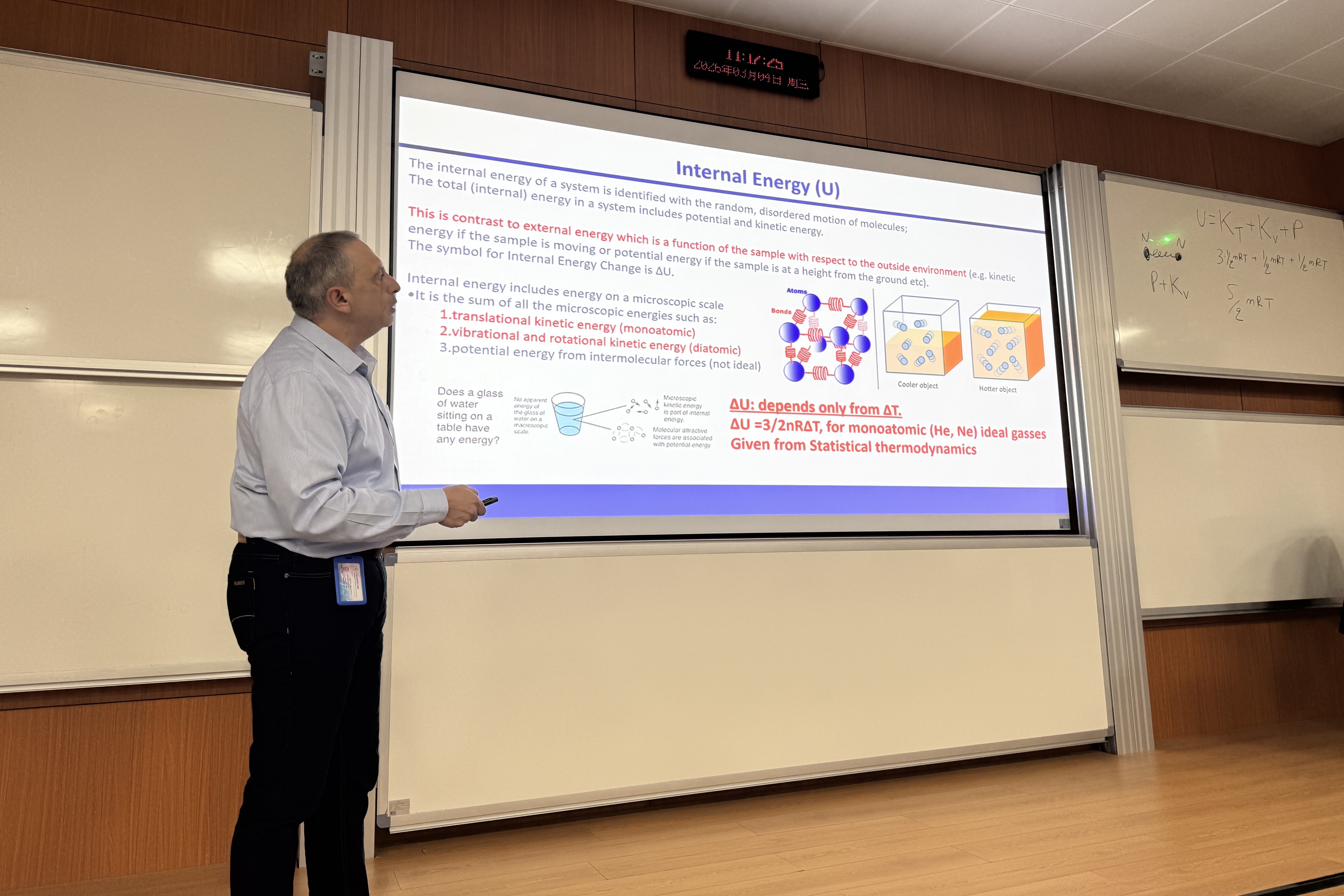
Through the lectures and tutorials, I learned how concepts such as thermodynamic laws, state functions, entropy, and thermodynamic potentials can be used to analyze equilibrium, phase stability, and phase transformations in materials. One part that particularly impressed me was how the course connected theoretical principles with real phenomena. Many daily examples and processes which are related to materials, such as heat transfer, glass transition, ice floating on water, and the distinction between thermodynamic stability and kinetic limitations.
During the lectures, the professor frequently asked questions and encouraged students to discuss them in class. This interactive approach helped deepen our understanding of the concepts. In addition, many examples from everyday life were used to illustrate abstract ideas. For example, when introducing the concept of the glass transition, the professor compared it to choosing a nearby restaurant when we are short on time. Just as we may not have enough time to search for the best restaurant and instead choose a convenient one, atoms in a material may not have sufficient time to reach the lowest-enthalpy configuration during rapid cooling, which leads to the formation of a glassy state. These examples made the theoretical concepts more intuitive and memorable. (Huang Ruoxi, 23MSE)
Thermodynamics of Materials is a core fundamental course for material majors, which mainly applies basic principles of thermodynamics to study the properties of materials. Many concepts in this course are rather abstract and difficult to understand for us. Fortunately, our professor is always patient and meticulous in explaining various basic problems for us, and clarifies complex knowledge points in plain language. The course is taught in a step-by-step manner following the development history of material thermodynamics. Students always maintain strong interest in learning, listen carefully and take an active part in interactions with the teacher. (Han Xiaowei, 23MSE)
When rigorous formulas come to life in experiments, and abstract theories take root in projects, we see how these courses, blending innovative ideas and practical wisdom, have become vital stepping stones on GTIIT students' path to professional growth. Moving forward, GTIIT will continue to set sail with cutting-edge technology as its compass, steer with the needs of the times, and chart new courses in the realm of science and engineering education.
Read More: GTIIT Course Exploration (1)
Text/Photos: the interviewed faculty and students, GTIIT News & Public Affairs