PostTime:7/29/2026
In 2026, the sixth cohort of undergraduate graduates from Guangdong Technion – Israel Institute of Technology (GTIIT) is ready to set sail. Armed with the knowledge and courage bestowed by their alma mater, and guided by the belief of "Dream it. Do it.", they have etched their youth in constant exploration and breakthrough. Let us step into their stories, and witness how they take action as wings to wider skies.
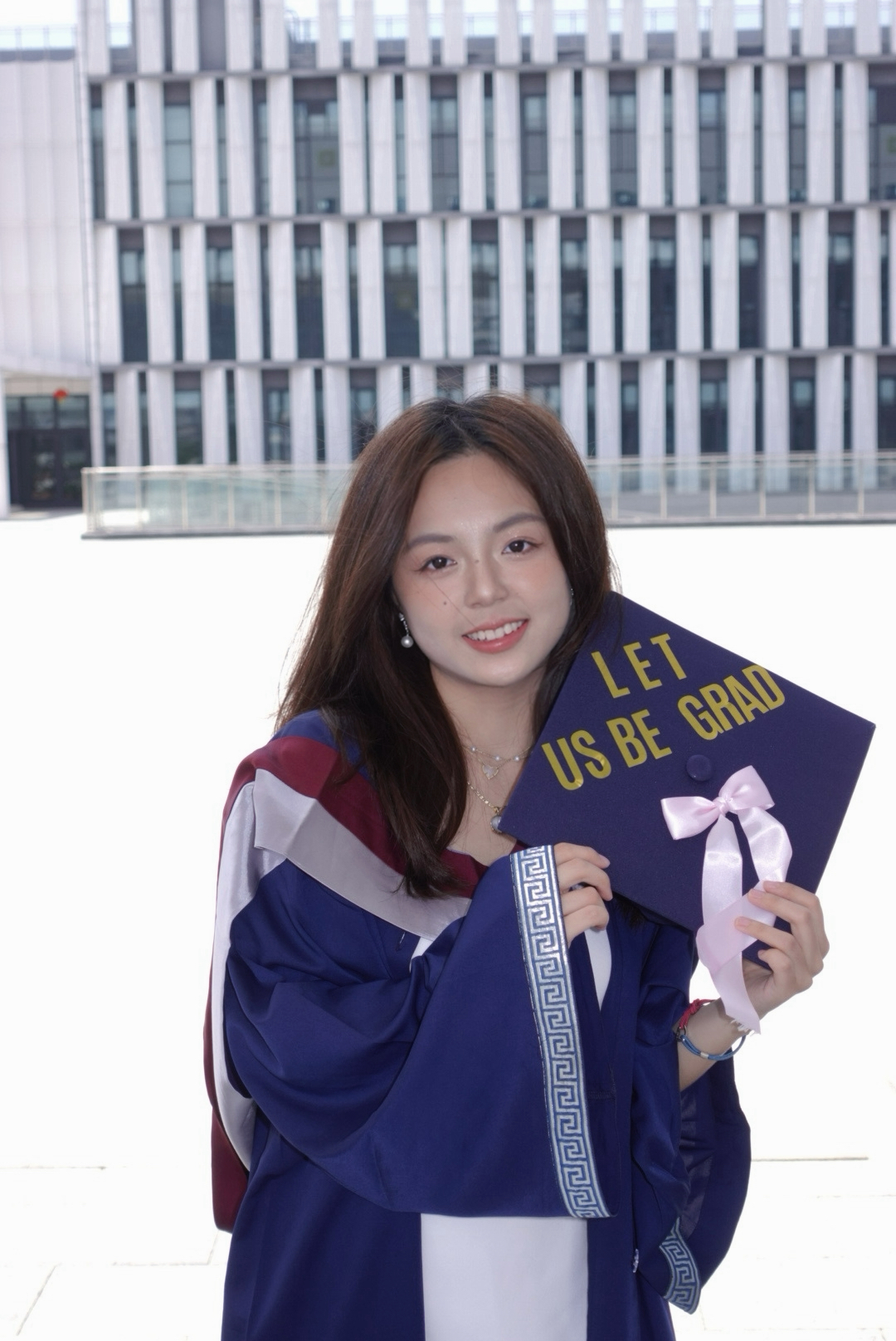
Name: Li Chunyi
High School: Guangzhou Tieyi High School
Program: Biotechnology and Food Engineering (BFE)
Awards:
GTIIT Dean's List (2022-2025)
First Prize of Speech Contest in the GTIIT Event "International Microorganism Day" (2023)
Second Prize of the 4th GT Start-Up Challenge (2023)
Offers:
Icahn School of Medicine at Mount Sinai (Biomedical Sciences)
Johns Hopkins University (Molecular Microbiology and Immunology)
University of Southern California (Clinical and Experimental Therapeutics)
University of Michigan–Ann Arbor (Microbiology and Immunology)
City of Hope Cancer Center (Translational Medicine)
The girl who once stumbled through high school biology and chemistry classes went on to top overseas medical schools—driven by sheer grit and a deep-rooted passion. Over four years at GTIIT, Li Chunyi wove "exploration and perseverance" into her growth. Her story, as she puts it, proves what she has always believed: learning and persistence can truly turn limitations into possibilities.
From falling behind to top scores: her fresh start at GTIIT
Chunyi's bond with biomedicine took root early in childhood. She used to watch medical documentaries with her mother. "The stories revealing how the human body works, and the battle between health and disease, completely fascinated me." Her parents encouraged her to follow her interests, and that support quietly planted a seed in her heart—that one day, she would contribute to human health.
But the path wasn't easy. The pandemic hit in high school, and prolonged online classes left her struggling in biology, chemistry, and math. She worked desperately to catch up when school reopened, but her foundation in those subjects stayed weak, and it cost her on the Gaokao exam. Still, rather than steering clear of the very subjects that had tripped her up, she boldly listed "Biotechnology" as her major on her university application.
GTIIT gave Chunyi a fresh start. "Everything here is taught in English, and the courses start from the basics. As long as you pay attention in class, take notes, and ask questions, your previous background doesn't hold you back much," she said. "I actually enjoy studying in English—most research papers are in English anyway, so getting used to the terminology in class makes it easy to read them."

Chunyi participated in GT Start-Up Challenge
At first, she was hesitant to speak up in class, but gradually she began to ask questions, challenge ideas, and join discussions. The subjects that once frustrated her gradually became her strengths. She scored perfect marks in courses like Basic Immunology and Biopharmaceutics-Pharmacology & Delivery. From frustration to genuine enjoyment, she made a stunning comeback on her own terms.
One question, a new path
At GTIIT, the BFE program gave Chunyi plenty of room to explore. Beyond core courses like molecular biology and biotechnology tools, GTIIT also offers electives with a medical focus, building a bridge across disciplines. "These courses took me from the most fundamental immunology all the way to clinical applications, which really helped me read papers and expand my research perspective," she said. In her view, GTIIT had already paved part of the interdisciplinary road, so she didn't have to start from scratch.
But what truly crystallized her direction was a course poster exhibition during her freshman year. It was the final project for a foundational course—each group studied an experimental paper, created a poster presentation, and faced live Q&A from professors. Chunyi's project focused on CAR-T cell therapy. On the day of the exhibition, a professor stopped in front of her poster and asked: "Do you think this advanced therapy could be widely applied in underdeveloped or economically disadvantaged areas?"

Freshman poster exhibition (Chunyi, first from the right)
"At that moment, I really felt this is a huge question," she recalled. Since then, her perspective has shifted from pure scientific curiosity to a broader, real-world dimension. "If I could develop new immunotherapies in the future, or optimize them so they become affordable and accessible in less developed areas, that would be very nice." One class, one poster, one question, and she found her calling in medicine.
From GTIIT to medical school: passion paved the way
In her sophomore year, Chunyi joined Assoc. Prof. Olivier Habimana's lab, working on the antibacterial and anticancer applications of biosynthetic nanoparticles (HNPs), systematically evaluating their effects on various cancer cells. This interdisciplinary project bridging materials and biology ultimately led to publications in ACS Biomaterials Science & Engineering and Scientific Reports.
Later, she proactively reached out to Prof. Stanley Li Lin at Shantou University Medical College, joining a project that used CRISPR-Cas9 to study multiple sclerosis. From molecular to cellular levels, she completed the entire gene-editing experimental chain. Each failed result and each revised protocol taught her that research is a process of trial and error, inching closer to answers with every attempt.
Last summer, she emailed overseas institutions and successfully secured a summer research opportunity in Jacobs School of Medicine and Biomedical Science-SUNY, Buffalo, becoming the first undergraduate in the group to work on HIV-related research. For three months, she worked nearly every day from 9 a.m. to 5 or 6 p.m., independently performing plasmid transformation and transfection of envelope proteins from different HIV-1 subtypes, detecting key protein expression via Western blot, and evaluating the inhibitory effect of specific proteins on viral infectivity using luciferase assays. She also constructed chimeric proteins, providing critical data for functional domain analysis. "It was exhausting, but it was an incredibly rare opportunity."
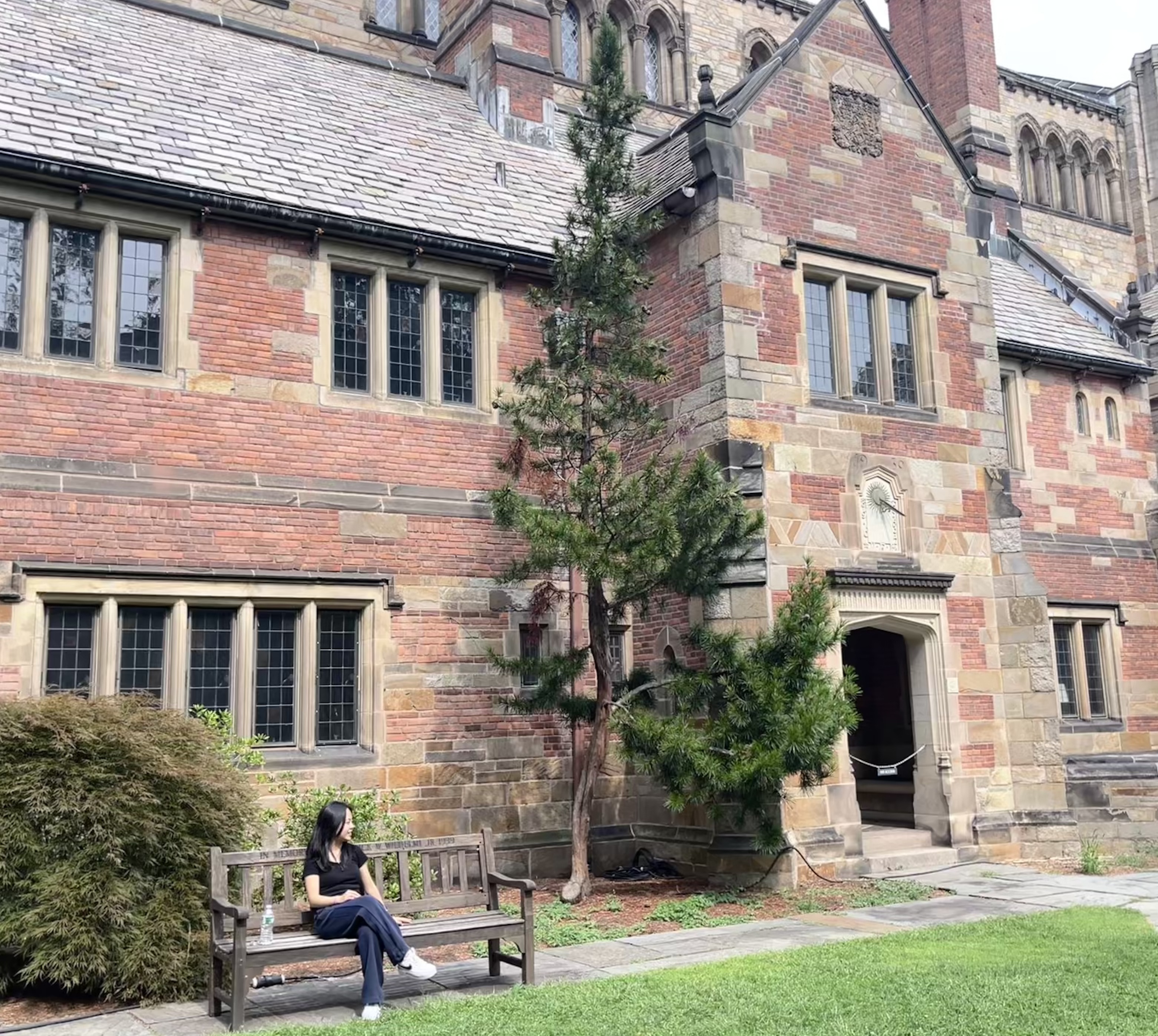
Chunyi visited Yale over the summer research period
When asked about her "secret" to crossing disciplinary boundaries, her answer was simple and resolute: "Passion." She has always believed that "you have to take the initiative to get opportunities". Whether reaching out to professors outside the university or actively pursuing research topics that interest her on campus, she never hesitates to take the first step. "Even though I didn't have prior medical research experience, they still let me into the lab because I showed immense enthusiasm. The faculty at GTIIT also really encourage us to pursue what we love, which helps me a lot."
Outside academics, Chunyi's life is as vibrant. She was an active member of GTIIT's dance club and performed at the freshman party. She also served as a peer tutor, sharing the pitfalls she had encountered and the lessons she learned with younger students. Looking ahead, she hopes to continue deepening her studies in immunology and contribute research that benefits as many people as possible.