PostTime:8/28/2026
To address the pressing need for next-generation electronic devices in the post-Moore era, Associate Professor Chen Peng of the Physics Department at Guangdong Technion – Israel Institute of Technology (GTIIT) has recently made a series of advances centered on computational simulations of "light–matter interactions" and "ferroelectric materials," offering critical theoretical insights into this global challenge. The related studies were published in the top-tier journal Physical Review Letters and, by invitation, as a review article in Optical Materials Express.
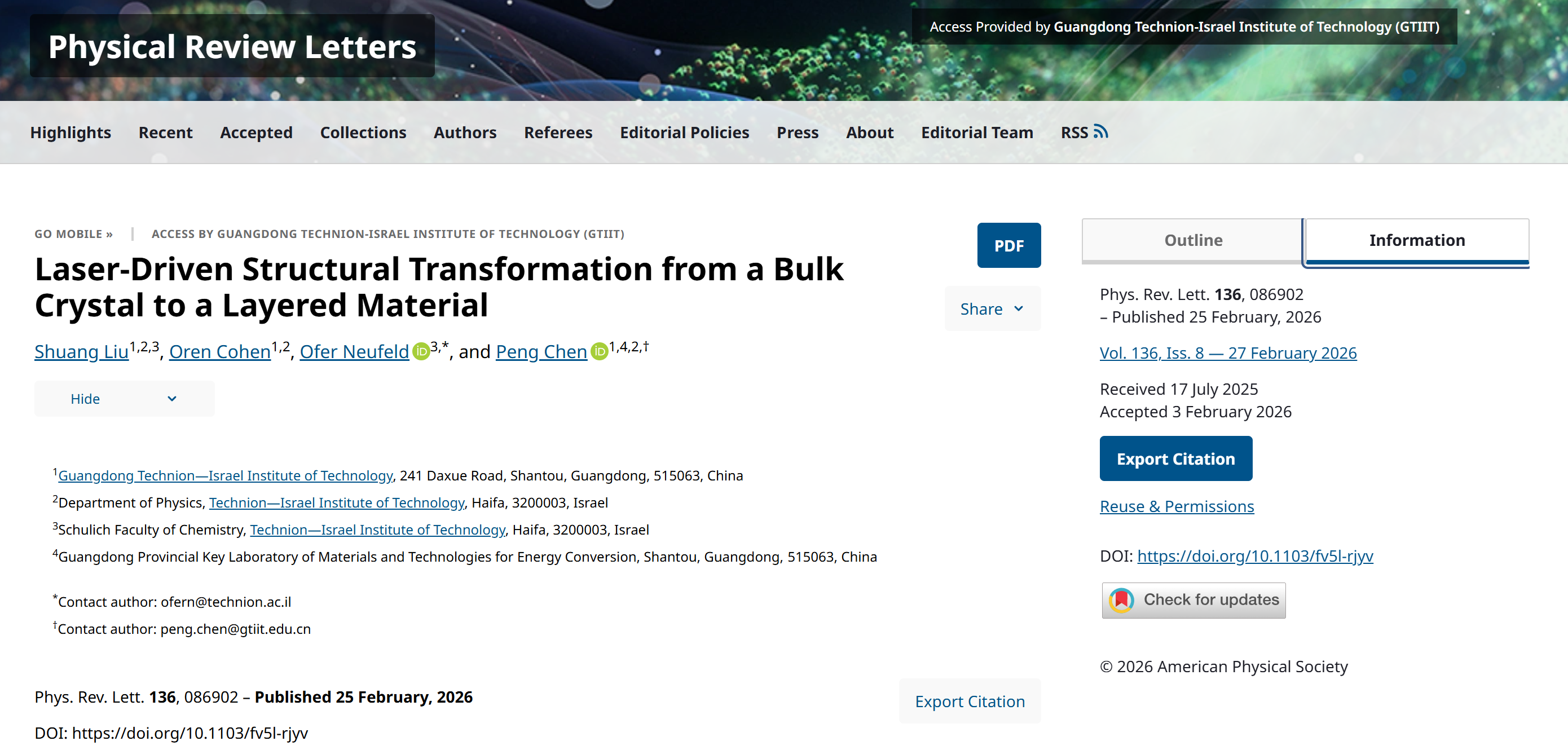
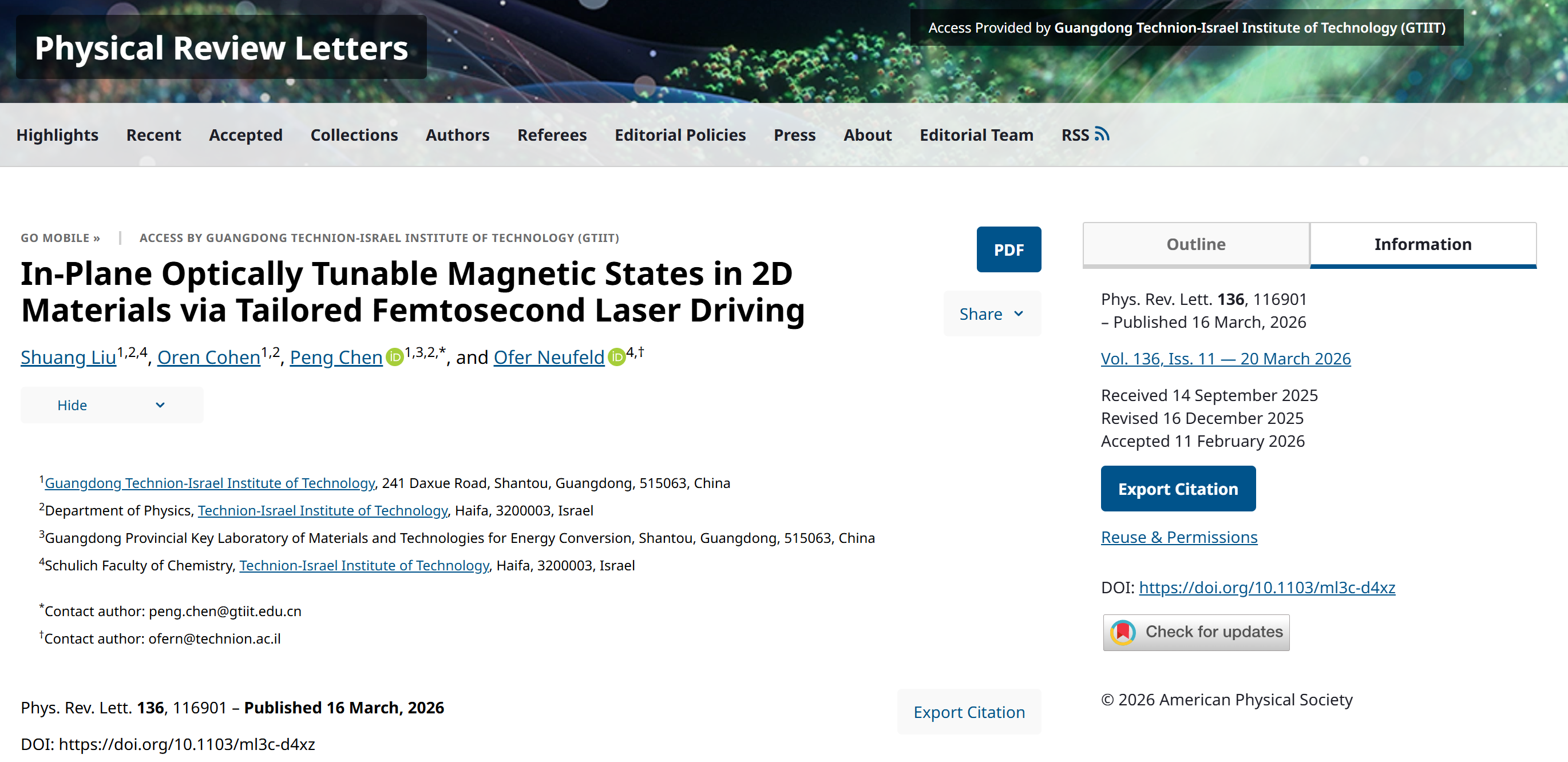
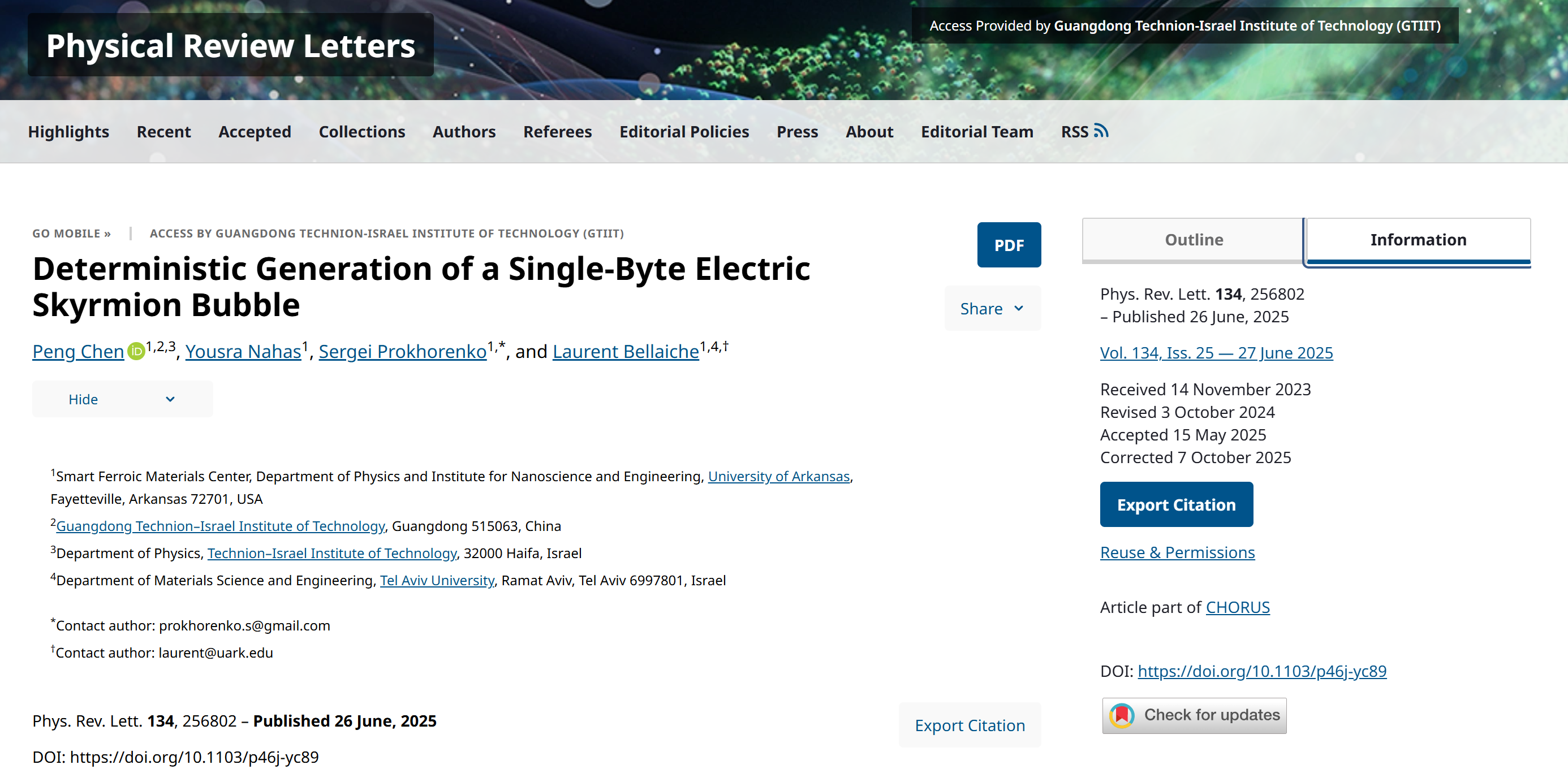
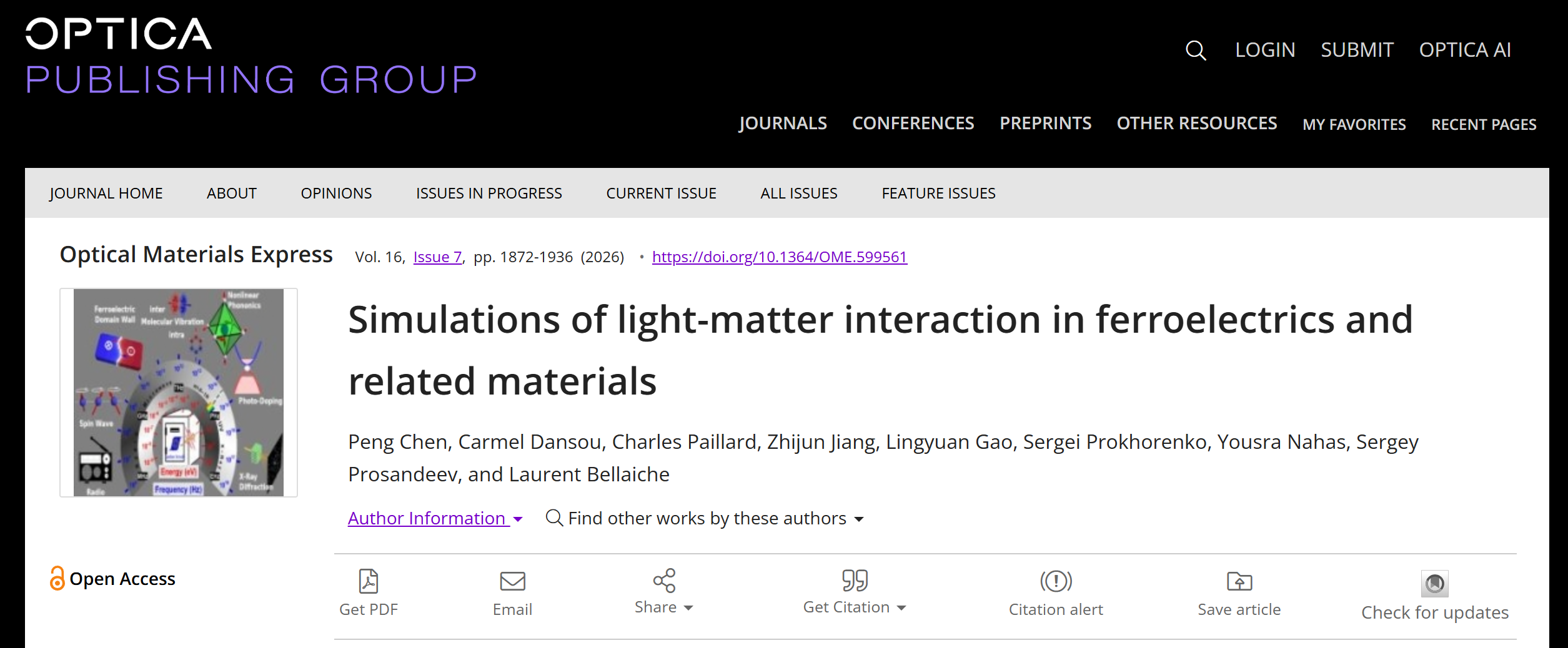
As a research-oriented university in science and technology, GTIIT is increasingly contributing high-quality research outcomes to serve national strategic needs, tackle global scientific challenges, and steadily expand its presence on the international academic map.
About the research
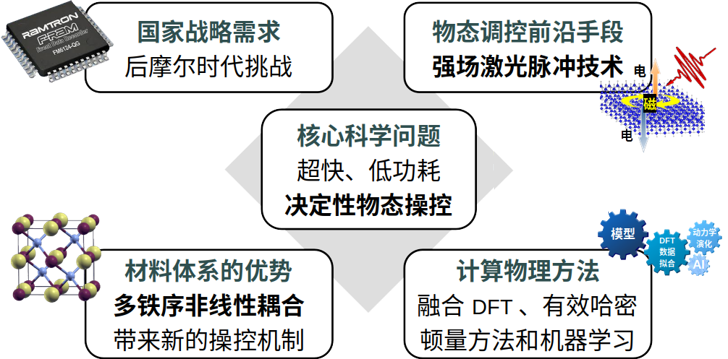
The surging energy consumption of the microelectronics industry stands in sharp conflict with the global push toward carbon neutrality, creating a worldwide dilemma that threatens the sustainable development of the digital civilization. Microelectronic components and systems are the bedrock of modern society, underpinning consumer electronics, telecommunications, information processing, and data storage. With the rise of the Internet of Things and cloud computing, the number of microelectronic devices has grown exponentially. At the same time, generative AI models such as DeepSeek and ChatGPT are being rapidly deployed across production and daily life, driving AI computing power demand to double every three to four months (EPOCH AI data) and further accelerating the exponential rise in microelectronic energy consumption. Projections indicate that within the next decade, microelectronics could consume nearly 50% of global electricity supply (IRDS 2023).
Moreover, under the current silicon-based semiconductor paradigm, the crisis of Moore's Law and the challenge of energy efficiency are increasingly irreconcilable. Over the past 50 years, Moore's Law has driven CMOS transistor dimensions to shrink by 50% every 18 to 24 months. Today, however, transistors are approaching the sub-10 nm limit, where classical electron dynamics can no longer fully describe device behavior. Scaling down brings not only fabrication complexity but also a significant rise in static leakage power due to quantum tunneling effects.
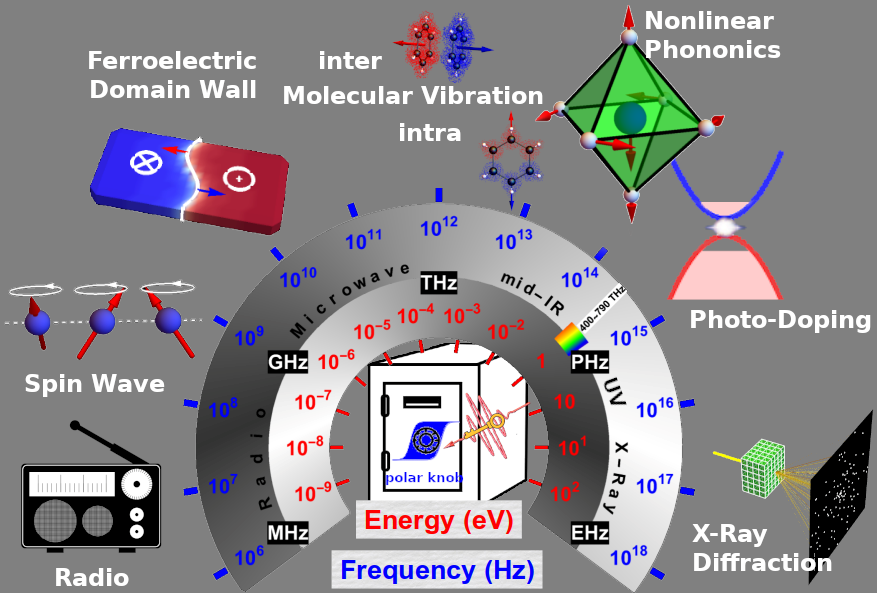
This series of work addressed post-Moore era challenges, focusing on ultrafast, low-power, and deterministic control of quantum states. By developing and applying first-principles and effective Hamiltonian methods, the team investigated the responses of magnetic order and crystal structures under mid-infrared excitation in various condensed matter systems, revealing the mechanisms of optical state manipulation and advancing the development of post-Moore electronic devices. This research aligned closely with the national major research program of "New Light Field Manipulation Physics and Applications" and resonated with the strategic goal of "achieving decisive breakthroughs in core technology" set forth in China's long term technology goal.
Journal Intro
Physical Review Letters (PRL) is the world’s premier physics letter journal and the American Physical Society’s flagship publication. Since 1958, it has contributed to APS’s mission to advance and diffuse the knowledge of physics by publishing seminal research by Nobel Prize–winning and other distinguished researchers in all fields of physics.
Paper link:
https://journals.aps.org/prl/abstract/10.1103/fv5l-rjyv
https://journals.aps.org/prl/abstract/10.1103/ml3c-d4xz
https://journals.aps.org/prl/abstract/10.1103/p46j-yc89
https://journals.aps.org/prl/abstract/10.1103/s8qs-nnzg
https://opg.optica.org/ome/fulltext.cfm?uri=ome-16-7-1872

Peng Chen
GTIIT Physics Program
Associate Professor
Recipient of the National Young Talent Program
Research Areas: light-induced exotic phase transitions in matter; first-principles multiscale excited-state simulations.
Publications: 30+ papers, 1,150+ citations, H-index 17. As first/corresponding author: Nature Materials, Nature Communications, Physical Review Letters, Advanced Materials.
Research Projects:
Lead one NSFC general program
Lead one sub-project of National Science and Technology Major Project
https://sites.gtiit.edu.cn/ccmm/
We welcome you to join the Q² Group!
We are recruiting for:
Postdoctoral researchers (Academician Workstation); Ph.D. and M.Sc. students (overseas degrees)
Quantum optics & strong-field physics
Microcavity polaritons
Light–matter interactions & non-equilibrium physics
Dynamical space groups & high-harmonic selection rules
Optical responses of ferroelectrics & multiferroics
First-principles excited-state methods & multiscale simulations